Editor’s Note: This is a special guest post by Don Stanton. Don is a retired U.S. Navy pilot who flew long-range P-3C (Aurora) patrol planes and serves on the Maryland Aviation Commission. He published Looking Back at the Cold War; 30 Veterans and a Patrol Plane Commander Remember. In this piece, Don writes about a young American who joined the RCAF and did his training in Virden and in Brandon to earn his wings. We have a small section in the museum dedicated to those US citizens who came to Canada to join and fight in the RCAF. You can find Don and more of his writing on Linked In.
Even after the Nazi invasions of Czechoslovakia and Poland and their vicious persecution of Jews, a September 1939 Gallup Poll found that 84% of Americans still opposed U.S. military aid to Europe. The America First Committee was formed in September 1940 at Yale University and rapidly grew to over 850,000 members in 450 chapters across the country. Many powerful senators, representatives, and business leaders pushed to keep the US neutral and opposed military assistance to Britain which might lead the US into the war.
In March 1939, Air Marshall Bishop visited President Roosevelt and gained his approval for low-key Royal Canadian Air Force (RCAF) recruiting. An American WWI pilot led the “Clayton Knight Committee” and established a headquarters in New York’s Waldorf Astoria hotel and recruiting hubs in 17 other U.S. cities. Low-profile RCAF recruiters visited airfields and bars across the US and compiled lists of over 700 potential instructors and 1,400 air crew candidates.
During the darkest years of WWII in 1940-41, thousands of determined young Americans ranging from workers to Ivy League students bucked the prevailing U.S. neutrality and took buses, trains, and even hitchhiked to Canada to enlist in the RCAF. They brought their high school diploma, two letters of recommendation, took tests, and were carefully interviewed during the aircrew selection process. RCAF interviewers were looking for highly motivated men who showed the potential to earn their brevet wings in about 6-12 months (depending on aircrew position; about 200 hours of flight time for pilots). Americans joined the RCAF by swearing an ‘Oath of obedience to superior officers’ rather than to the king.
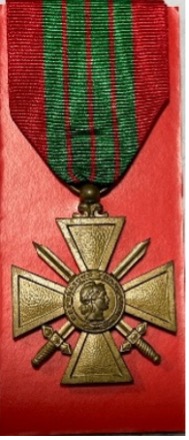
One of those motivated Americans who joined the RCAF in Montreal on April 17 1941 was 19-year-old Jacques (John) Andre Hubert De Le Paulle who was born in New York City, educated in France, but listed his home as Washington D.C. John had already been in action in 1940 as a US Ambulance Corps volunteer in France and was awarded the Croix de Guerre. John started at No.2 Initial Training School at Regina SK where he was selected for the pilot track and trained at No.19 Elementary Flying Training School at Virden MB.
De Le Paulle checked-in on August 31, 1941 to No.12 Service Flying Training School at Brandon MB with Class #37. His class was part of the intense push to get trained pilots shipped over to Britain and only about seven months after enlisting, John was awarded his pilot brevet on November 22, 1941. As noted in this CP article: “Brandon Manitoba November 22, 1941 “Wings Added To Croix De Guerre. Nineteen-year-old John De La Paulle of New York who won the Croix De Guerre as a volunteer United States ambulance driver in Belgium and France in 1940 today received Royal Canadian Air Force Wings at No. 12 Service Flying Training School here. When Wing Cmdr. R.C. Gordon, commanding officer of the air station, pinned the wings on his chest the young American pilot who holds vivid memories of Nazi Stuka pilots machine gunning Red Cross and American ambulances overseas expressed pleasure that “I will soon be able to take a crack at ‘Jerry’ with something more than an ambulance.” No. 12 Service Flying Training School Brandon
Pilot Officer John De Le Paulle must have had good mathematics test results because he was selected for the long-range patrol flying boat pilot track which required him to go to advanced navigation training at No. 32 Air Navigation School Charlottetown PEI and then on to No. 31 Operational Training Unit Debert NS before shipping overseas in mid-1942. De Le Paulle was initially assigned to No. 423 Squadron at RAF Castle Archdale Northern Ireland and later to the new RCAF No. 422 Squadron flying Sunderland flying boats. These huge aircraft were manned by a crew of about 11 (including 3 to 5 gunners), cruised at only about 155 knots, and had an endurance of 13 hours.

On September 3 1943 at 0100 F/Lt De Le Paulle took off with a crew of 12 from RAF Castle Archdale Northern Ireland in Sunderland III “P” DD861 for a long-range anti U-boat patrol in the Bay of Biscay. 8 hours later at 0915 the starboard outer engine caught fire and dropped from the wing followed by the starboard inner engine failing. John managed to ditch the Sunderland in Bay of Biscay, the crew sent out three “SOS” messages, and released their homing pigeon to hopefully fly back to their base. The Sunderland sank in two minutes, but the crew gathered in two dinghies and managed to survive until they were rescued 4 days later. RCAF 422 Sunderland, DD861, Crew? – WARTIMES.ca

F/Lt De Le Paulle later flew in the RAF Coastal Operational Training Unit and in December 1944 he returned to Canada where he served in No. 45 Group before leaving the RCAF in September 1945. A September 10 1944 article noted “Flt/Lt J.A. De Le Paulle of 4884 MacArthur Boulevard, Washington, D.C., 23-year-old American pilot in the R.C.A.F. who has recently won the D.F.C for anti-U-boat operations, spent part of 10 days leave in Normandy in capturing four armed German soldiers. He also entered Paris with the American Army of Liberation.” R.A.F. COASTAL COMMAND PILOT SPENDS 10 DAYS LEAVE IN NORMANDY | Imperial War Museums
It is amazing that withing five years, 23-year-old F/Lt De Le Paulle had gone from volunteering for ambulances during the 1940 Fall of France, to gaining his wings at Brandon’s No. 12 SFTS in 1941, to winning a DFC in 1944 hunting U-boats. Between 1940-45, over 9000 Americans stepped-up to serve in the RCAF and 829 were killed in action. In the years after the US entered WWII, about half of these Americans would transfer into the Army Air Forces, but about half decided to stayed with their RCAF and RAF squadrons. Americans in the Royal Canadian Air Force during World War 2 – Military Aviation Chronicles
 Commonwealth Air Training Plan Museum & RCAF WWII Memorial