Initial Training Schools (ITS)

Our summer workers return, including Rory M., who continues his blog post features with this one exploring the ITS. Rory is a student at Brandon University.

During the Second World War, the young men from across Canada who entered the Commonwealth Air Training Plan and faced the Initial Training School had a similar moment. However, their tests carried greater weight, and within weeks, their performance on course materials decided their path as a pilot, navigator, or air gunner in the Allied air effort. 

The first Initial Training School (out of the 7 that would be constructed) opened in Toronto, ON, on May 1st, 1940. As the Air Training Plan expanded to include Regina, Victoriaville, Edmonton, Belleville, and Saskatoon, ITS served as an academic foundation for every student’s future career in the Air Force.

Initially, the ITS course lasted a brief four weeks, incorporating lectures and coursework in navigation, math, aerodynamics, meteorology, and science. Interspersed with foot drills, physical training, and coursework, the discipline required of service members was solidified through the ITS experience. While students were expected to absorb large amounts of unfamiliar information in a short period of time, new recruits were eager to fly but first had to prove they were willing to learn. 

photo of Students studying in the library of an Initial Training School in Quebec (Canadian War Museum)
Students studying in the library of an Initial Training School in Quebec (Canadian War Museum)
Photo of Examples of textbooks studied in Initial Training School, from the CATPM’s main gallery.
Examples of textbooks studied in Initial Training School, from the CATPM’s main gallery.
A LINK trainer exhibit in the CATP Museum’s hangar.

Additionally, ITS was a selection system, not a school. While many recruits enlisted in the RCAF with the hope of becoming a pilot, other aircrew positions were available and essential to a pilot’s success. Broadly, candidates were first grouped by educational background. Those with more extensive high school education were streamed towards navigator or pilot training, while others were streamed towards roles such as wireless operators or air gunners. Another factor was a particular aptitude for flying skills. One of these tools, found in the CATPM hangar, is the link trainer (see photo), an early flight simulator that challenged a trainee’s potential as a pilot. 

According to Author F.J. Hatch in Aerodrome of Democracy: Canada and the British Commonwealth Air Training Plan, the first group of ITS graduates from Toronto showed a division of roles within the class. Out of the 164 recruits, 92 were selected as pilots, 41 became navigators, 25 as air gunners, and 6 were unable to complete the course. Unlike a typical pass/fail report card that today’s students may receive, completion of the course determined an individual’s role in the war. 

While much of the medical and psychological testing of the RCAF was completed at Manning Depots upon enrollment, at ITS initial testing, such as minor issues in vision, blood pressure, and heart function, was conducted to evaluate trainees. Additionally, strict physical requirements were enforced, which may have had an impact on your placement in careers. Pilot candidates for example, could not exceed 6 feet 3 inches or 200 pounds, and had to be between the age of 18-28. Academic expectations were additionally significant. In the beginning of the war, candidates on the prairies were required to have at least completed a grade 11 education. However, this requirement was later replaced by the RCAF’s classification test, which measured learning ability rather than formal educational attainment. Like students today striving for competitive educational opportunities, trainees knew that every opportunity on their training path had an impact on their future in the Armed Forces. 

For those selected as navigators, their training at the ITS introduced fundamentals and critical tools of aerial navigation. Trainees were introduced to tools such as compasses, sextants, and drift recorders, and studied the relationship between air and ground speed, wind and its role in flight path, and how to plot flight courses effectively. These lessons, first introduced in the classroom, would later be essentially applied in the air. 

Finally, as the war progressed, ITS evolved. Beginning as a four-week program, the course had expanded to ten weeks by October of 1942. This change reflected a growing recognition of the importance of ground instruction before elementary flying training. These schools were ultimately recognized as playing a vital role in the Commonwealth Air Training Plan by providing a foundation of knowledge, a mechanism for sorting out critical roles, and transforming civilians into aircrew. Before any aircraft took to the skies, the outcome of the war was shaped by the important work being done in classrooms across the country.

From the Archives: Lantern

Google has this wonderful little tool that we use quite often in the archives. You go to google search and tap the icon that looks like a camera on the far right of the search line. You can then take a photo of your item and by the magic of the internet find out what you are looking at (reverse image search). It doesn’t always work but it does give you some hints as to where to look. This item, a carbine lantern, donated in 1991 by Barry Sobchuk of Brandon turned out to be a gem (see photo on the right). It would have been used during the black outs during the War. It is old and rusty but we do wish we could hear the stories it could tell. The lanterns produced a bright white light through the process of dripping water onto calcium carbide. The slit in the lens cap reduced the lighted area so was suitable during the blackouts. It was also popular because batteries were scarce. They were mostly used by civilians on patrol but were also used in railway stations to inspect wheels and other duties. The handle of this lantern has an opening so that the lantern could be hung on a post or bicycle. Canada did have mandatory black outs particularly along the coasts that feared enemy attacks. So where it was used and how it travelled to the prairies to end up in our Museum will probably remain a mystery.

item submitted by CATPM archivist, Judith.

The CATP Museum Opens for the Season on April 1!

FOR IMMEDIATE RELEASE
March 26, 2026

Commonwealth Air Training Plan Museum Reopens for the Season April 1

Brandon, Manitoba – The Commonwealth Air Training Plan Museum will reopen for the 2026 season on April 1, welcoming visitors back to the hangar just in time for Spring Break.

The Museum will be open daily from 1:00 pm to 4:00 pm beginning April 1, offering families, visitors, and aviation enthusiasts the chance to explore one of Canada’s most important Second World War training sites.

Over the winter months, staff and volunteers have been busy behind the scenes working on new exhibits, caring for the collection, maintaining aircraft, and preparing for the next stage of the Museum’s growth. This work continues as the Museum moves forward with planning for future redevelopment while keeping the historic hangar active and open to the public.

“We are always excited to open the doors again for the season,” said Zoe McQuinn, Director General of the Commonwealth Air Training Plan Museum. “A great deal of work happens over the winter, and reopening in the spring is a chance to welcome the community back and share the stories that make this place so important.”

Visitors can see historic training aircraft, vehicles, and artifacts connected to the British Commonwealth Air Training Plan, the massive wartime program that trained more than 220,000 personnel in Canada during the Second World War, including aircrew, ground crew, instructors, and support staff whose work contributed to victory.

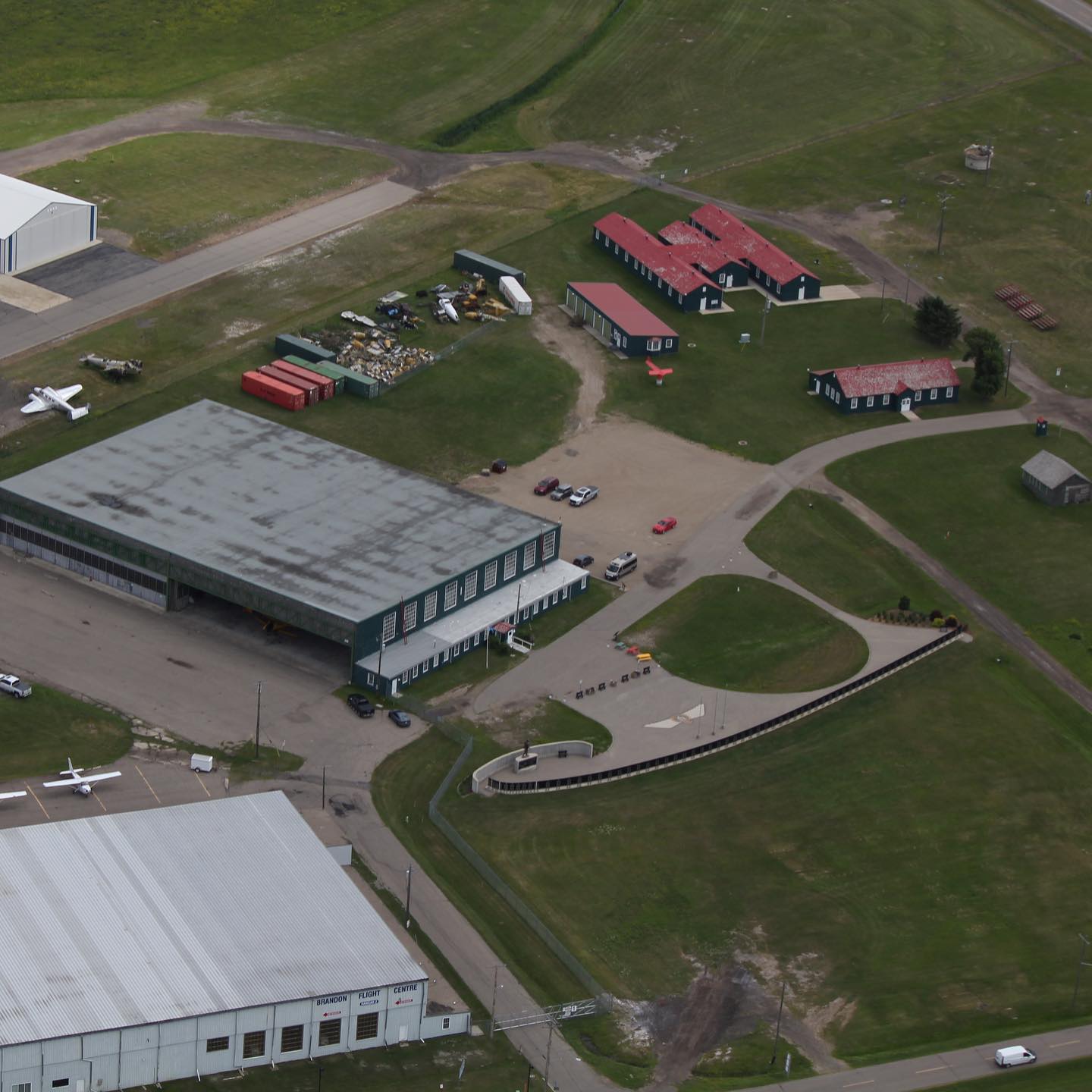
Located at the Brandon Municipal Airport, the Museum is part of the Manitoba Signature Museums network and welcomes visitors from across Manitoba and beyond.

To get the most value from their visit, the Museum encourages visitors to consider becoming members. Membership at the Commonwealth Air Training Plan Museum provides unlimited admission throughout the season and includes reciprocal benefits through the Manitoba Signature Museums network, offering free admission at participating museums across Manitoba, including the Canadian Fossil Discovery Centre, Le Musée de Saint-Boniface Museum, Manitoba Agricultural Museum, Mennonite Heritage Village, New Iceland Heritage Museum, and Royal Aviation Museum of Western Canada. Membership support plays an important role in helping the Museum care for its collection, maintain historic aircraft, and continue planning for the future of the site.

Spring Break is an ideal time for families to visit, with plenty of space to explore and something for all ages.

For more information, visit
www.airmuseum.ca
or follow the Commonwealth Air Training Plan Museum on social media.

Hiring: Visitor Services Assistant & Museum Interpreter

Visitor Services Assistant & Museum Interpreter (Temporary Part-Time)

Commonwealth Air Training Plan Museum, Brandon, Manitoba

Located at the Brandon Municipal Airport

The Commonwealth Air Training Plan Museum is seeking a temporary part-time Museum Interpreter & Visitor Services Assistant to support weekend operations and visitor services from April 1 to August 31, 2026. This position is ideal for someone with an interest in history, aviation, education, tourism, or museums, and who enjoys working with the public in a small, hands-on environment.

The Museum honours the legacy of the British Commonwealth Air Training Plan and shares the stories of the more than 220,000 aircrew who trained in Canada during the Second World War. Our work is rooted in community engagement, education, and respectful stewardship of history.

Position Details

  • Temporary part-time position
  • Term: April 1 – August 31, 2026
  • Primarily weekends, with occasional weekday or event shifts
  • Typical hours: 12:30 pm – 4:30 pm (April 1 – April 30), 9:30 am – 4:30 pm (May 1 – August 31) 
  • Wage: $16.50 per hour

Duties may include

  • Front desk reception and visitor services
  • Providing guided tours to visitors and school groups
  • Operating the gift shop and handling cash / POS transactions
  • Assisting with special events, flying days, and volunteer coordination
  • Light cleaning and general upkeep of museum spaces
  • Assisting with museum security procedures
  • Assisting with collections, cataloguing, or exhibit work as needed

Qualifications

  • Interest in history, museums, aviation, tourism, or education
  • Strong communication and interpersonal skills
  • Ability to work independently in a small team environment
  • Reliable and responsible
  • Drivers licence and transportation required

Students, retirees, and individuals with experience in history, education, tourism, or heritage organizations are encouraged to apply.

Commitment to Inclusion

The Commonwealth Air Training Plan Museum is located on Treaty 2 Territory, the traditional lands of the Anishinaabe, Cree, Oji-Cree, Dakota, and Dene peoples, and the homeland of the Metis Nation. We are committed to respectful relationships, inclusive storytelling, and ensuring that the history shared in our Museum reflects the diversity of those who served and those who lived through the wartime experience.

We are committed to inclusive hiring practices and welcome applications from all qualified candidates, including Indigenous peoples, members of racialized communities, persons with disabilities, women, and members of 2SLGBTQ+ communities.

How to Apply

Please email your resume to:

airmuseum@inetlink.ca or DirectorGeneral@CATPM.onmicrosoft.com

Applications will be accepted until March 27, 2026.

Only applicants selected for an interview will be contacted.