Mandates and Serial Plates

This post is by our summer student, Seraphina. Sera has been with us 3 summers now and is heading to Ottawa at the end of summer to do a Masters program at Carleton University. She has written several blog posts for us over the past 2 years.

When it comes to museums, the primary focus is often on the artifacts in both the public exhibits and in the archives. What kind of artifacts? How many? How old? The questions go on and on. I know whenever I go to a museum, it’s the artifacts that I look forward to seeing the most (I often also try to get tours of the archives when I can). Every museum is different and their collections are all determined by their mandate — this is the museum’s purpose; it explains why the museum exists and what it collects. Mandates can be broad or specific, or anywhere in between, and here at the Commonwealth Air Training Plan Museum we have a very explicit mandate. While a full explanation can be found on our website, generally, our mandate can be summed up to the following: We collect and preserve objects with a direct relation to the British Commonwealth Air Training Plan between the years of 1939 and 1945.

We collect and preserve objects with a direct relation to the British Commonwealth Air Training Plan between the years of 1939 and 1945.


Like most museums, what you see in our galleries is only a small fraction of what we’ve actually collected. We have fairly extensive archives and we’re receiving new donations almost daily. Many of these donations are done through direct communication with the museum and through that we’re able to get an understanding of that object’s history. So when we receive these items, we already know that they fit our mandate. Sometimes, however, we receive a few wayward donations — objects mysteriously dropped at our door. When this happens, we have to do some research in order to be sure that they’re related to our museum. If they fit, we take them, if not, we reach out to find a museum or archive that can. Similarly, we find old items from the museum’s early days stashed away in storage and they need to be re-catalogued according to our modern standards. When this occurs, like with our mystery donations, we do some background research in order to determine if it’s something our museum should keep.

Sometimes this process is as simple as looking at the date on a letter, other times the process is much more complicated. It’s especially so when it comes to old machinery and power equipment. Doing the background research on some of the equipment is one of the ways I’ve helped out around the museum. Originally, during my first summer here, I was tasked with doing some research on our ground vehicles in order to make sure that our signage was up to date. This project not only piqued my interest, but it sparked my love of historical research. While doing this work, I started to become very familiar with not only Vehicle Identification Numbers (VINs), but with various forms of serial number/identification plates and how to research them. It was a great introductory project, though I would love to go back and have the chance to re-do it with all the new information that I’ve learned since.

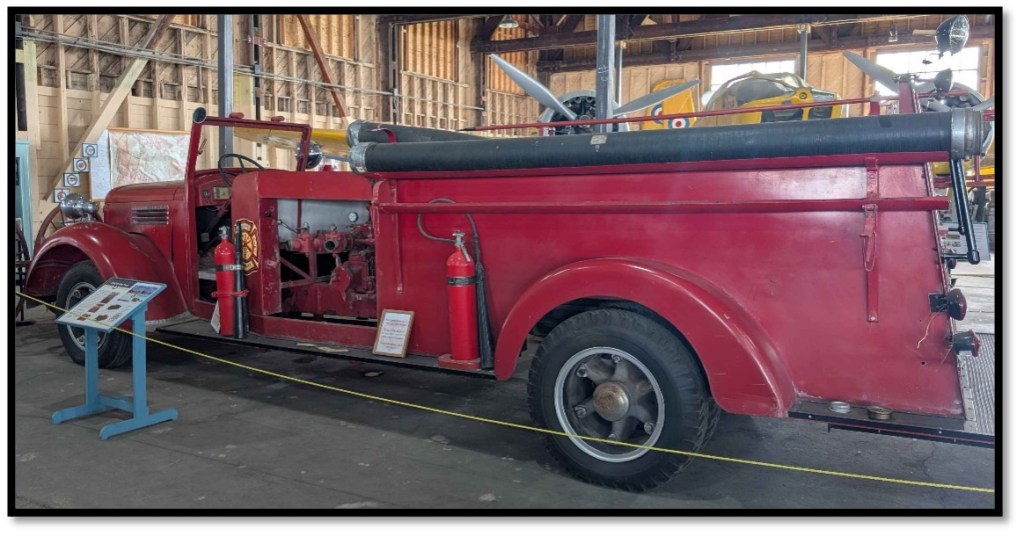
The Museum’s 1942 International Fire Truck
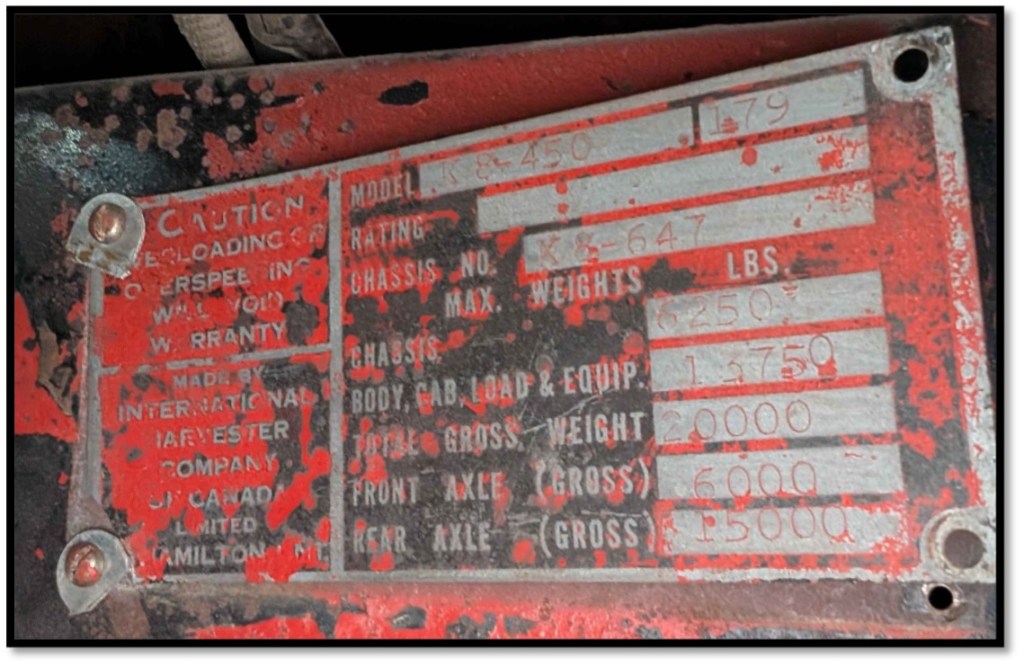
Serial plate from the fire truck

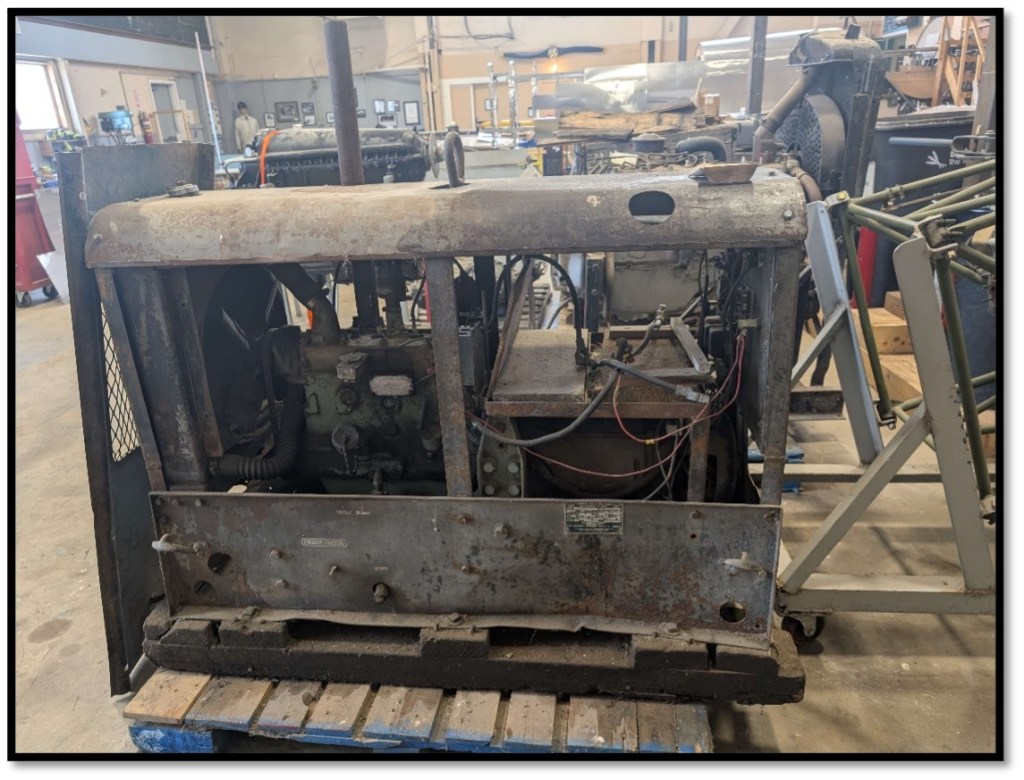
It was during my second summer at the museum that I was first tasked with researching one of our mysterious machines — an antique portable generator. Nobody knew anything about the machine, except what it was, and they wanted me to determine if it was related to the BCATP or for that matter, even war era. What’s tricky about researching these old machines, is that there aren’t any manuals or online databases you can use to look up serial numbers like with modern equipment. Another difficult part is that the companies that manufactured these objects often don’t exist anymore, or they’ve been renamed. This makes it so that you have to determine the year of the object, not from the object itself but from the context clues hidden around it. For this portable generator, it was the history of the manufacturer that provided me with the information I needed.

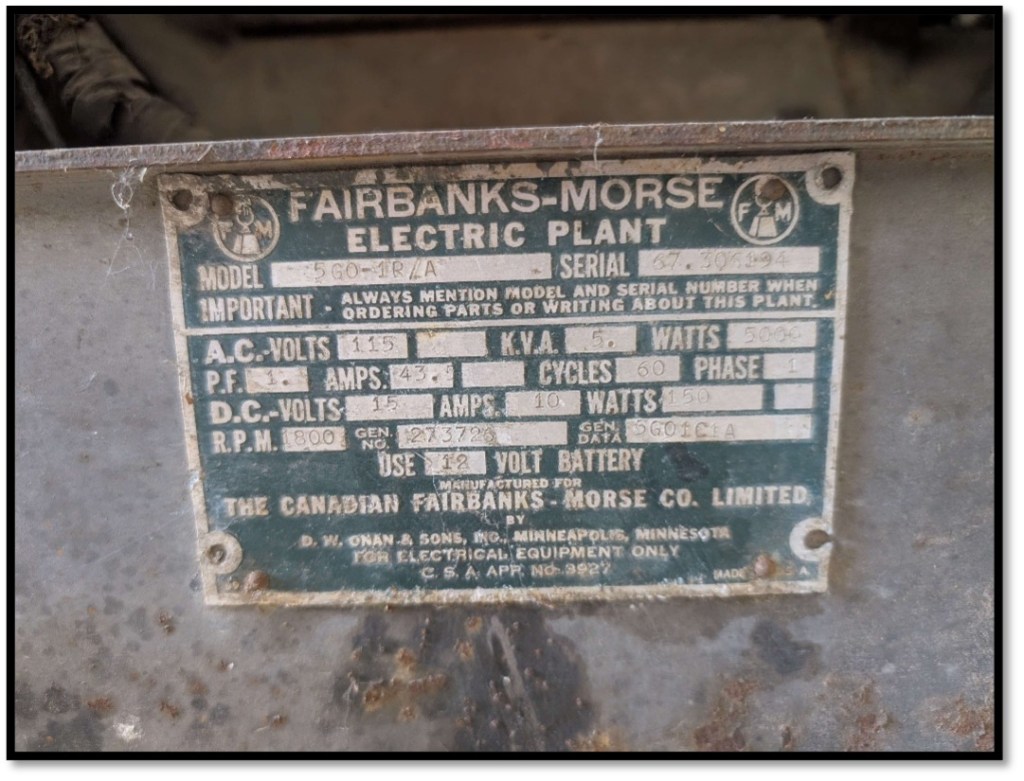
I initially started with the primary identification plate, and while I went down many other unnecessary rabbit holes (it was my first time after all), this plate provided me with all that I needed in the end. For some strange reason, my first instinct was to look into the battery system described on the plate. While I couldn’t find much concrete evidence, I was roughly able to determine that 12 volt battery systems didn’t become commonplace in machines like this until after the war. Though it wasn’t enough information to completely write off the machine as post-war, it did start to raise some flags. After that, the next place I looked was much more logical — the manufacturing information on the bottom of the plate. This generator was manufactured by the Fairbanks-Morse company so that it could be sold by D.W. Onan & Sons, so I began looking for the connection between these two companies. I was able to find a short book on the history of D.W. Onan & Sons and in there it stated that these two companies did not begin collaborating until just after the war. This means it was not possible for the generator to be war-era or related to the BCATP.

The mystery generator
The generator serial plate

From here, it was time to think about the next steps. This generator did not fit our museum, so we couldn’t keep it. It wasn’t functional and it was very unlikely that another museum would be willing to take it. So, I had to make the unfortunate, but surprisingly common suggestion that the generator be scrapped for parts. This side of museums and archives is often very rarely discussed, but sometimes not everything is worth keeping. A large part of archivists’ jobs is to destroy objects that do not have a proper home and no longer provide value. Sometimes the best way to make sure things are properly preserved is to get rid of other objects taking up space. Of course, the destruction of objects is used as a last resort, but that does not change the fact that sometimes it is a necessity; such as with this generator. While it is important to preserve our past, we cannot hoard memories. When it comes to museums, the artifacts and objects they collect are one of the main driving forces. Plenty of work and research goes into the exhibits that our guests see, but almost just as much invisible work happens behind the scenes. This is true for us here at the Commonwealth Air Training Plan Museum and it’s true for every other museum around the world. These kinds of tasks take both people and time, so if you’re ever interested in volunteering to help with this side of our museum, we would be more than happy to welcome you to our team.

Stephen Hayter Retiring

FOR IMMEDIATE RELEASE

Commonwealth Air Training Plan Museum Honours Stephen Hayter Following 27 Years of Leadership

Brandon, Manitoba – After 27 years of dedicated service, Stephen Hayter, Executive Director of the Commonwealth Air Training Plan Museum (CATPM), will retire at the end of June, concluding an extraordinary career devoted to safeguarding Canada’s aviation heritage.

Since joining the Museum in 1999 as its first full-time Executive Director, Hayter has helped transform CATPM from a volunteer-led organization into a nationally recognized museum while remaining true to its founding mission of sharing and honouring the history and legacy of the British Commonwealth Air Training Plan.

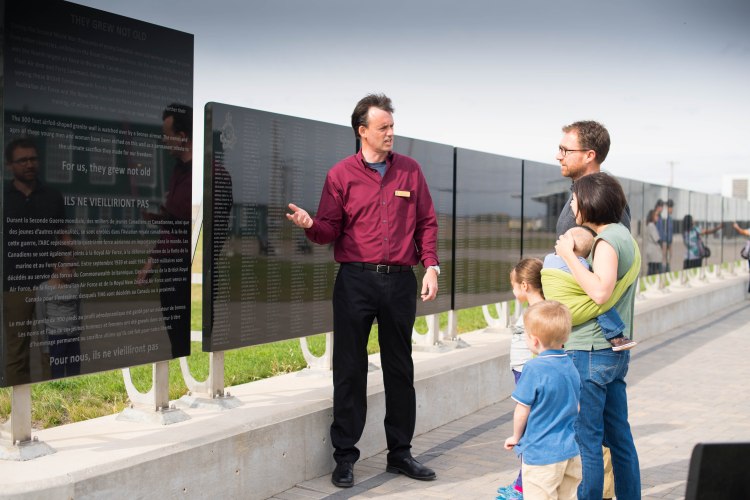
Under his leadership, the Museum expanded its educational programming, strengthened community partnerships, grew its collections, advanced major fundraising and capital initiatives, and welcomed visitors from across Canada and around the world. Hayter also played a key role in the creation of the RCAF WWII Memorial Wall, ensuring the service and sacrifice of thousands of Canadians and Commonwealth aircrew will continue to be remembered for generations.

“Stephen’s contribution to the Commonwealth Air Training Plan Museum has been extraordinary,” said Ken Dzogan, President of the Board of Directors at CATPM. “For more than a quarter century, his passion, dedication, and steady leadership have ensured one of Canada’s most important wartime stories continues to be shared with future generations. On behalf of the Board, our volunteers, staff, members, and supporters, I want to thank Stephen for his remarkable service and wish him every happiness in his retirement.”

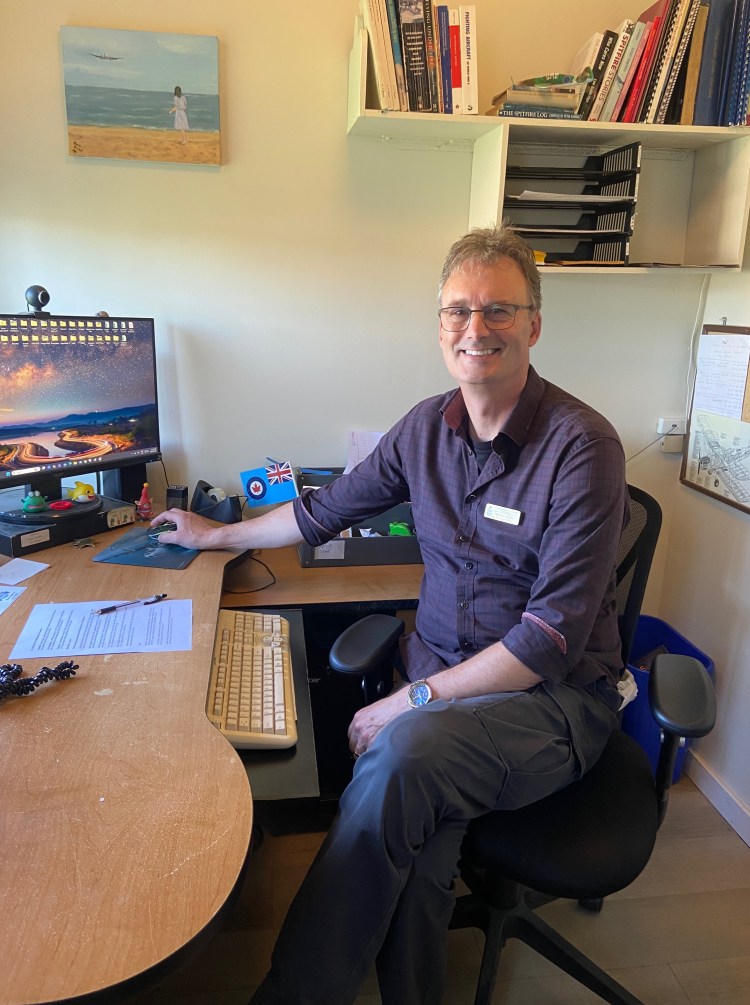
Stephen Hayter at a desk in his office
Stephen in his Office
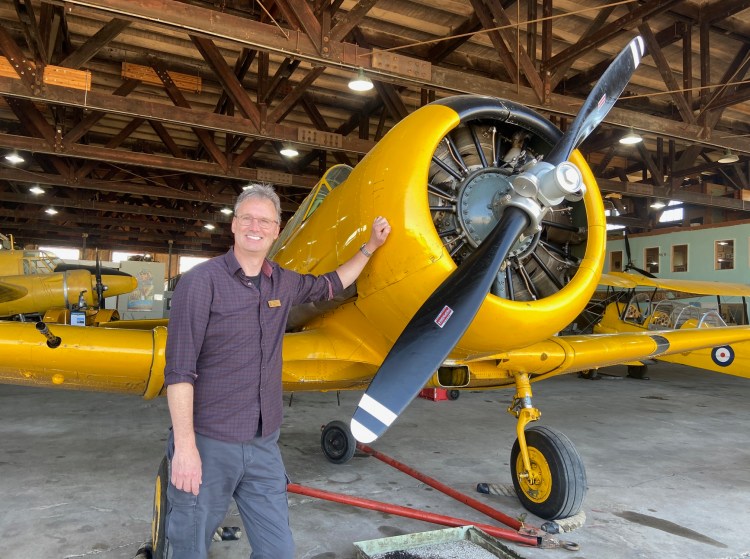
Stephen with the CATPM’s Harvard MkII
Stephen showing the RCAF WWII Memorial Wall
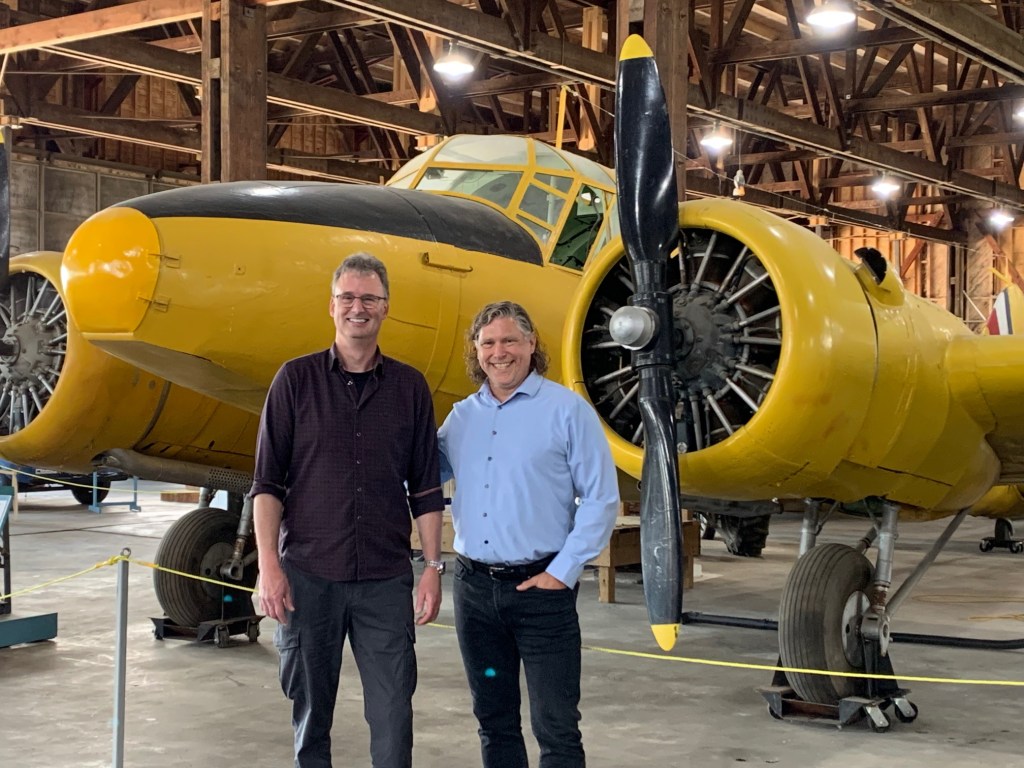
Stephen (left) with the Mayor of Brandon, Jeff Fawcett in front of the Anson.

Reflecting on his career, Hayter said:

“It has been an incredible privilege to serve the Commonwealth Air Training Plan Museum and to work alongside so many dedicated volunteers, staff, supporters, and community members. The stories preserved here are more than history-they remind us of courage, service, innovation, and the importance of remembering. I know the Museum’s future is bright, and I look forward to watching it continue to grow.”

The Board of Directors, staff, volunteers, and members extend their sincere gratitude to Stephen Hayter for his 27 years of service, vision, and unwavering commitment. His legacy will continue to be reflected not only in the Museum’s aircraft and collections, but in the thousands of visitors, students, volunteers, and supporters whose understanding of Canada’s wartime aviation history has been enriched through his work.

As the Museum enters its next chapter, it remains committed to carrying forward the legacy Stephen helped strengthen-sharing the remarkable story of the British Commonwealth Air Training Plan from Canada’s last remaining operational BCATP hangar and ensuring those who served are remembered for generations to come.

Zoe McQuinn, Director General

Trading the Hangar for History Panels: A Student’s Guide to the CHA

Whitney M. Hodgins is a Masters of Arts Student at Athabasca University focusing on Social & Heritage History. Whitney is a student summer worker at the CATPM, this is her third post for us.

Some folks might have noticed my usual spot at the Commonwealth Air Training Plan Museum was empty during the first week of June. That is because I traded a week of talking about World War II aviation history for stepping inside a modern aircraft myself, taking flight all the way to Charlottetown, Prince Edward Island. While PEI is famously celebrated as the birthplace of Confederation, it recently served as the backdrop for my own professional milestone: attending the Canadian Historical Association’s (CHA) Annual Meeting. Trading the museum hangar for academic panels was an incredible opportunity, and I am excited to share how this week of professional development gave me a whole new perspective to bring back to our vintage wings in Brandon.

Whitney Hodgins in the Photograph at the “Lookout”, Charlottetown, PEI. 
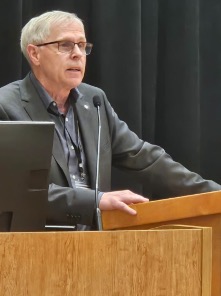
Dr. Edward MacDonald giving his keynote address, June 2026.

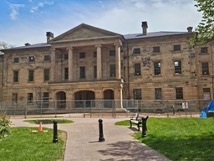
But as any museum buff knows, you cannot visit a historic city without doing a little boots-on-the-ground exploring. I explored downtown one afternoon. When not visiting the markets on cobble stone streets, I was enamoured by visiting St. Dunsten’s Basilica. A towering example of high Victorian Neo-gothic style architecture, St. Dunsten’s Basilica is not just a significant place of worship for many, it is also a National Historic Site! I also visited Province House, where John A. McDonald and company would attend the Charlottetown Conference, this building also happens to be what is now today’s provincial legislature for PEI. This building is also a National Historic Site (NHS) currently under high levels of renovation, so I could only enjoy it from afar. I also got the pleasure of seeing the bay and seeing a swarm of Lion’s Mane jellyfish in their natural habitat as apparently there is a peak time to witness this phenomenon in nature (so I was unsuccessful in touching the bay with my toes). In addition to being a massive tourist of other historical sites and showing off my CAPTM merch, I also attended many panels at the CHA Annual Meeting, where other historians or graduate students like myself presented their current research, thesis’, or collaboration work with other universities. The keynote for the conference was none other than Dr. Edward MacDonald, Professor Emeritus at the University of Prince Edward Island. He gave this year’s keynote titled, “Reckoning with Place: Region and the Role of the Historian in Troubled Times”. There was a lot to unpack in his address, but what took me back and what really got me excited is how he challenged everyone in that room to pick up more local history and to go back to our roots as historians where local and regional history is used to contextualize greater national and transnational narratives. He argued that you cannot do history justice without bringing in the places, people, and local narratives into the consciousness of the time period we are researching but also in a museum context, we have the important job of reiterating and retelling those narratives from that time period. 

Province House, June 2026
St. Dunstan’s Basilica, June 2026
Lion’s Mane Jellyfish, June 2026

MacDonald caught me in his web of logic by talking about how as a young historian being frustrated with the fact that PEI back then was viewed as just simply the birthplace of confederation and this narrative, although important for all of Canada’s past, completely neglected the rest of PEI’s immense history. In many regards, Westman gets viewed in a similar light by those not aware of our communal past, that we are boring as an agricultural community is something that both tourists and everyday citizens discuss. This is where theory of place as a discipline within history has become vitally important. As historians, archivists and museum specialists can probably all agree on, we do not simply talk about the past in a way that brings meaning for the everyday person, we also translate that meaning from the past into language that makes sense for everyone. It pulls in the local narratives that are a piece of our more national and transnational narratives. It puts faces to names and brings meaning to a complex topic that now is becoming part of the long ago past for the future generations of people to walk through these doors. At the CAPTM, we are a museum as well as a National Historic Site. While most NHS’ and museums do many different things to contextualize the past of their own mandates, one thing remains clear, museums and NHS’ are providing that foundation to go back to local and regional histories that historians may depend on for research projects. 

As the conference continued on, I networked with a lot of individuals at various levels in their academic careers, from undergrads to emeritus professors. Ultimately, trading the hangar for history panels proved to be an invaluable experience. Navigating my first CHA Annual Meeting felt less like a departure from my regular duties and more like an essential expansion of them. Armed with a deeper appreciation for the “theory of place,” a stack of new books purchased from the book fair, and fresh perspectives from across the country, I am eager to apply these insights to our work in Brandon. While this journey served as a fantastic student’s guide to the CHA, it also reminded me that every vintage wing and local story we preserve at the museum plays a vital role in flight-mapping the broader narrative of Canadian history.

Lighting the Night: A New Artifact and Its Role in the Commonwealth Air Training Plan

Another interesting post by summer student, Rory. This is Rory’s second summer working for the CATPM, he is a Music & Political Science student at Brandon University.

Note on Methodology: This blog post examines a recently acquired General Electric Beacon by analyzing attached identifying information related to the artifact and utilizing digital tools, such as Google Lens, recently introduced to me by the CATPM archivist. These sources enabled me to infer the artifact’s origin and historical context through consultation with relevant online histories and archival databases to the best of my ability.

In the early decades of flight leading up to the Second World War, navigating the skies was a daunting task, let alone in the dark of night. Before modern tools like advanced radio operation and GPS, pilots relied on physical chains of lights to find their way. A recently acquired artifact in the CATPM hangar, a General Electric Beacon (No. 1124, Model No. 2AR7A), reflects the legacy of Canadian wartime industry. The Canadian General Electric Company was both a major player in military and civilian life during WWII, manufacturing millions of appliances in Canadian homes and vital infrastructure for the war effort. (York University)

Rotating beacons developed by the General Electric Company, often featuring durable construction and powerful lamps, were spaced along routes, and some could be seen up to 40 miles away (Smithsonian National Air and Space Museum).  Based on an official guide by General Electric for all of their appliances, I believe that this unit was manufactured in August 1944, which makes it a part of General Electric’s storied wartime production history. (“GE Appliance – How to Determine the Age or Manufacture Date”)

Airmen from the RAF flying school returning from a night training flight. (North Bay Museum)
The Beacon, which is (currently) placed in the south 
corner of the CATPM hangar. 
Identifying Information of the General Electric Beacon.

The origin of beacons for aviation began in the 1920s and 30s, building upon the new development and installation of traffic lights across the United States with the goal of assisting pilots with visual navigation. (Onondaga Historical Association) Additionally, large concrete arrows were often built on the ground around beacons in the chain, transforming aviation from a strictly daytime activity to permitting flight during the dark. As a specialized “aerodrome beacon,” this artifact was used to identify the location of an airfield, although beacons exist for other purposes today, such as checkpoints for Bluetooth inventory with high-value equipment (ELA Innovation). The significance of the aerodrome beacon lies in its capacity to provide crucial visual confirmation for pilots returning during poorer visibility, directly enhancing flight safety by reducing the risk of disorientation or accident during night or inclement weather. By using a variety of patterns and colours, beacons indicate the exact location of airfields while also communicating important information about the airfield itself (Transport Canada). During the British Commonwealth Air Training Plan, these beacons represented a technological advancement that enabled more rigorous and flexible flight training schedules, allowing pilots in Canada to operate safely regardless of daylight or weather conditions. Although airport beacons became less central as new forms of navigation technology emerged, their continued use reflects their enduring importance in providing navigational support and the development of aviation infrastructure.

Additionally, while this Beacon represents General Electric’s contribution to lighting and appliances, it is an even larger part of their much larger history of aviation innovation during the war. A subsidiary of General Electric, GE Aerospace traces its roots to more than 100 years ago, beginning with innovations for aviation such as the turbo supercharger in the 1910s. (General Electric) In the United States, in 1941, GE built the I-A engine, the first American turbojet, and by the same year that this beacon was made, another engine (the J33) was used to power the Lockheed P-80 Shooting Star. Today, GE is still a major player in the aviation industry, including manufacturing the engines for Boeing 737s.

As radio navigation and GPS have become the standard, aerodrome beacons have gradually become less used than in wartime. However, some beacons are still used today, such as in mountainous regions of the United States and Canada. (Military History Wiki) Ultimately, these surviving artifacts of the Commonwealth Air Training Plan are a reminder of the vital innovation and infrastructure that allowed the members of the plan to train on such complicated aircraft at such a young age and supported them through flying at all hours of the day, and the Museum is thrilled to welcome this artifact to our hangar.

From the Cockpit with Love: The Romantic History of WWII Sweetheart Jewelry

This post is by one of our summer workers. Whitney M. Hodgins is a Master of Arts Student at Athabasca University.

Picture this: your loved one is going to war. You are left with an overwhelming sense of uncertainty. Will they come back or will they be injured or killed in action? Naturally, you do not want that person to be put in harm’s way fighting against the Axis. Yet, you let them go knowing that while you are on the homefront, you are being as patriotic as your loved one on the battlefront. Months go by, your only contact is letters back and forth when they are in a position to write to you. You may even send care packages or help others do the same for their loved ones. Then one day you visit the post office and there is a small package addressed to you! Inside is a letter, as well as a small heart shaped necklace (Canadian War Museum, 2023). Your loved one writes explaining that after shooting down an Axis plane in a dogfight, they salvaged a piece of the cockpit window to fashion a heart-shaped necklace just for you. A truly romantic gesture. As you place it around your neck, you feel a sense of pride—knowing not only that they are safe, but that they are fighting with honour for Canada and the Allied forces.

photo of RCAF "sweetheart" jewelry
WWII Sweetheart Jewelry located in the Chapel of the museum.

So what exactly is sweetheart jewelry? Sweetheart jewelry has one predominant purpose; it was to symbolize both the connection of the wearer and the separation they had to their loved ones fighting overseas (Canadian War Museum, 2023; National Museum of American History, 2014). These tokens of affection were primarily given to women who were deemed to be a wife or sweetheart to that service member, and those women did not need to be women from Canada (CBC, 2025). Jewelry did not restrict itself to simply necklaces, a loved one could also receive brooches, lapel pins, and other sorts of sweetheart art (National Museum of American History, 2014). These pieces of jewelry were popular not just in WWII but also were very popular in WWI (National Museum of American History, 2014). These pieces of jewelry were so popular that they also caught the attention of the federal government in WWI (Government of Canada, 2026). 

WWII Sweetheart Jewelry located in the Chapel of the museum.

The government of Canada had decided that they would implement an Excise Act Tax on luxury goods, specifically for jewelry made out of precious metals (Government of Canada, 2026). Tin was considered one of the metals needed for the war effort and in response to cheap jewelry and its popular demand in war times, the government restricted metal use in fine jewelry by implementing taxation rates on these items (Canadian War Museum, 2023). The jewelry that the servicemen created was not made of these precious metals, but instead was made out of Plexiglas. Plexiglas, was a clear, solid plastic sheet, created by the Rohm and Haas Company, that had risen in popularity during the 1930’s for both the Allies and Axis (Science History Institute Museum & Library, 2026). By doing so, a service member not only sent their love a piece of jewelry, but they also avoided paying the luxury tax while crafting their love in the chaos (Canadian War Museum, 2023). Additionally it was patriotic as the plexiglas that these were made out of could come from planes that were shot down by a recipient’s loved one in battle, demonstrating the courage the service member possesses (National Museum of American History, 2014). This may be an artifact filled with a complex and political history, but at the same time one cannot lose track of the fact that a service-member altruistically wanted to say proudly, “from the cockpit with love”.