Our summer workers return, including Rory M., who continues his blog post features with this one exploring the ITS. Rory is a student at Brandon University.
During the Second World War, the young men from across Canada who entered the Commonwealth Air Training Plan and faced the Initial Training School had a similar moment. However, their tests carried greater weight, and within weeks, their performance on course materials decided their path as a pilot, navigator, or air gunner in the Allied air effort.
The first Initial Training School (out of the 7 that would be constructed) opened in Toronto, ON, on May 1st, 1940. As the Air Training Plan expanded to include Regina, Victoriaville, Edmonton, Belleville, and Saskatoon, ITS served as an academic foundation for every student’s future career in the Air Force.
Initially, the ITS course lasted a brief four weeks, incorporating lectures and coursework in navigation, math, aerodynamics, meteorology, and science. Interspersed with foot drills, physical training, and coursework, the discipline required of service members was solidified through the ITS experience. While students were expected to absorb large amounts of unfamiliar information in a short period of time, new recruits were eager to fly but first had to prove they were willing to learn.
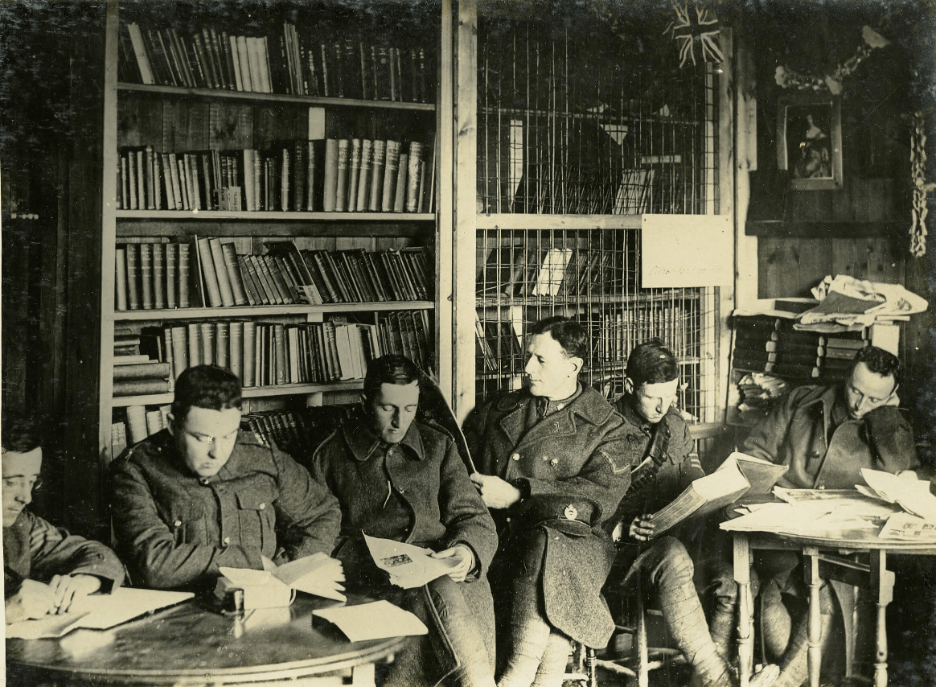
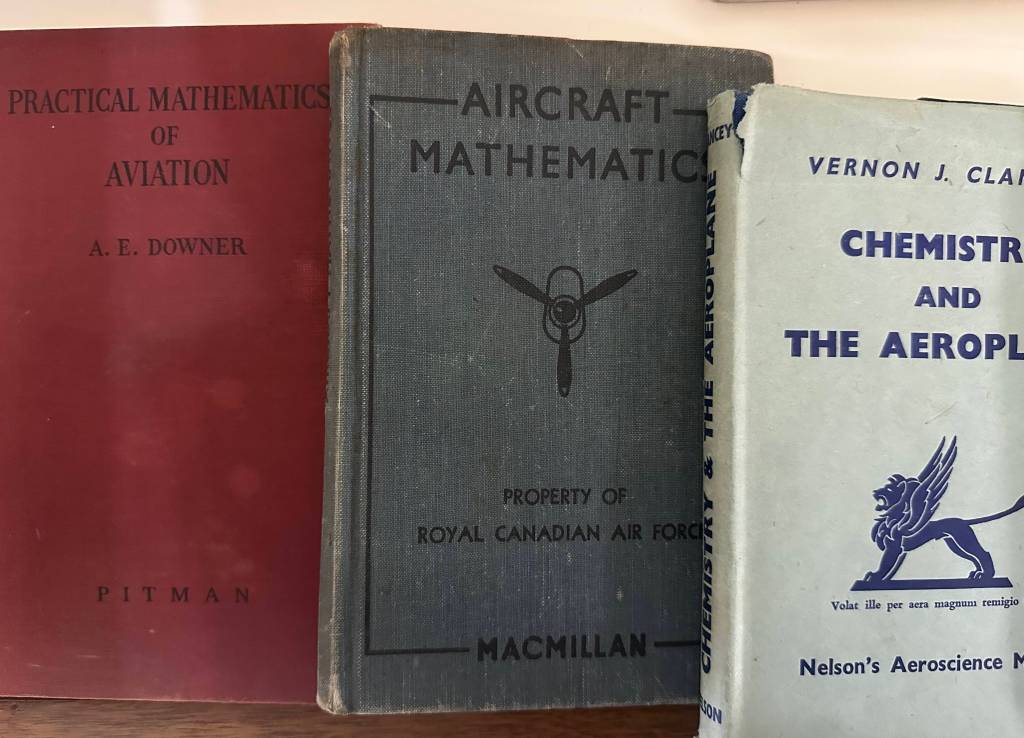
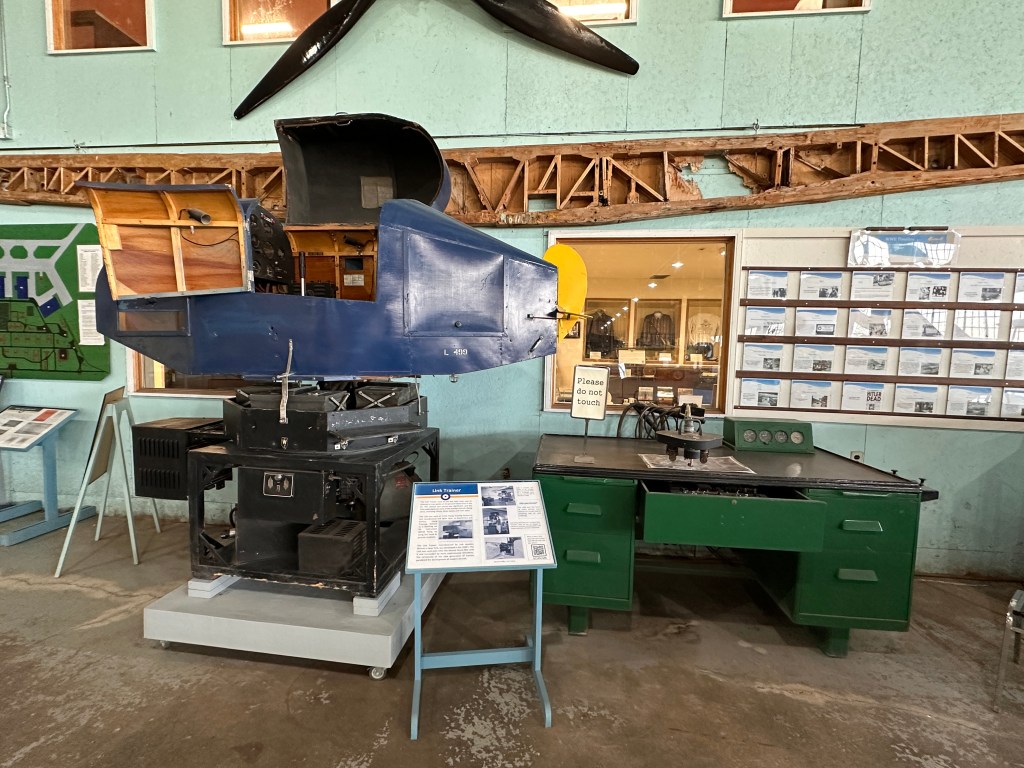
Additionally, ITS was a selection system, not a school. While many recruits enlisted in the RCAF with the hope of becoming a pilot, other aircrew positions were available and essential to a pilot’s success. Broadly, candidates were first grouped by educational background. Those with more extensive high school education were streamed towards navigator or pilot training, while others were streamed towards roles such as wireless operators or air gunners. Another factor was a particular aptitude for flying skills. One of these tools, found in the CATPM hangar, is the link trainer (see photo), an early flight simulator that challenged a trainee’s potential as a pilot.
According to Author F.J. Hatch in Aerodrome of Democracy: Canada and the British Commonwealth Air Training Plan, the first group of ITS graduates from Toronto showed a division of roles within the class. Out of the 164 recruits, 92 were selected as pilots, 41 became navigators, 25 as air gunners, and 6 were unable to complete the course. Unlike a typical pass/fail report card that today’s students may receive, completion of the course determined an individual’s role in the war.
While much of the medical and psychological testing of the RCAF was completed at Manning Depots upon enrollment, at ITS initial testing, such as minor issues in vision, blood pressure, and heart function, was conducted to evaluate trainees. Additionally, strict physical requirements were enforced, which may have had an impact on your placement in careers. Pilot candidates for example, could not exceed 6 feet 3 inches or 200 pounds, and had to be between the age of 18-28. Academic expectations were additionally significant. In the beginning of the war, candidates on the prairies were required to have at least completed a grade 11 education. However, this requirement was later replaced by the RCAF’s classification test, which measured learning ability rather than formal educational attainment. Like students today striving for competitive educational opportunities, trainees knew that every opportunity on their training path had an impact on their future in the Armed Forces.
For those selected as navigators, their training at the ITS introduced fundamentals and critical tools of aerial navigation. Trainees were introduced to tools such as compasses, sextants, and drift recorders, and studied the relationship between air and ground speed, wind and its role in flight path, and how to plot flight courses effectively. These lessons, first introduced in the classroom, would later be essentially applied in the air.
Finally, as the war progressed, ITS evolved. Beginning as a four-week program, the course had expanded to ten weeks by October of 1942. This change reflected a growing recognition of the importance of ground instruction before elementary flying training. These schools were ultimately recognized as playing a vital role in the Commonwealth Air Training Plan by providing a foundation of knowledge, a mechanism for sorting out critical roles, and transforming civilians into aircrew. Before any aircraft took to the skies, the outcome of the war was shaped by the important work being done in classrooms across the country.

