RAMWC Aircraft Donation to the CATPM

Press Release [Brandon, MB – December 13, 2024] 

The Commonwealth Air Training Plan Museum (CATPM) is excited to announce the arrival of a number of British Commonwealth Air Training Plan (BCATP) aircraft, various aircraft engines and parts, all courtesy of the generosity of the Royal Aviation Museum of Western Canada (RAMWC). The RAMWC of Winnipeg has a long-standing partnership with Brandon’s CATPM.  Over the past 5-6 years, the RAMWC has more clearly defined their mandate and as such, they recognized that certain aircraft and artefacts would not have the opportunity to be displayed.  Therefore as a sound strategic choice to de-accession the following items to Brandon in order that the public will have access to these items and their stories:

  • Bolingbroke Mk IVT – 9869
  • Fairchild Cornell II – FV705
  • North American Harvard II – AJ555
  • North American/CCF Harvard’s 2516, 2937, and an unknown Mark 4.
  • Fleet Fort
  • Armstrong Siddley Cheetah engines
  • Jacobs L4 and L6 engines
  • Kinner B5 engine

The CATPM would like to thank the RAMWC for entrusting our museum with their British Commonwealth Air Training Plan aircraft collection. These items are within our mandate of RCAF training 1939 to 1945 and will be treasured parts of our collection going forward. We have long term plans to restore several of the aircraft to flying condition. 

The RAMWC will now house their restoration team within their museum and their next four restoration projects are:

  • F86 Sabre (more than 6,800 volunteer hours invested already)
  • Junkers F13
  • Hawker Hurricane (5/8)
  • Bristol Freighter

Visitors will now be able to observe their restoration team in action on the museum hangar floor.

Below: photos of some of the aircraft & parts being moved to Brandon

For more information, please contact the CATP Museum

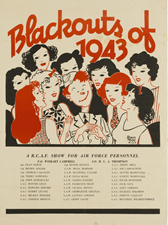
The Mark Humphries Orchestra Concert

What an amazing concert by the Mark Humphries Orchestra on Sunday!  We are so proud to showcase a true musical gem in our community, and grateful that over 400 came to watch because they know it as well!  

Mark, thank you for your incredible generosity, enthusiasm and hard work to get this idea going and brought to life.  To the musicians, thank you for so effortlessly transporting us back in time with such beautiful harmonies. To the sound technicians and all those who help the band look and sound so fantastic (it’s not just lots of practice!) thank you, your efforts have not gone unnoticed.  

Thank you to our sponsors and supporters: Banquets and Bashes, Clover Cakes, Hair Today Mall Barbers, and Krk Auto Fix.  Thank you to our museum volunteers, and especially to Aurora, Danica, Ben, Seraphina, Deacon, Trina, and Emma for helping out on the day. Many thanks to Trevor and the rest of the fantastic staff at the WMCA, another gem in our community that deserves all our support!  Shandar of Banquets and Bashes, you are a true gem as well.  Thank you for all that you do, and we can’t wait to do many more events with you!  

One last thank you- to everyone who came and supported the orchestra and the museum.  If you’d like us to do this again, just let us know!

Big Events in November!

November will see a number of events at/for the museum, so mark your calendar!

November 5th at 1:30 pm will feature renowned author, Ted Barris, presenting a talk related to his latest book, The Battle of Britain: Canadian Airmen in their Finest Hour. Barris is the author of many best selling books, including Behind the Glory (about the BCATP), Dam Busters, The Great Escape, and The Battle of the Atlantic. Copies of his new book will be available at the talk for purchase (also available at Indigo/Chapters and Amazon) and Ted will do some signing as well which will take place in the CATP Museum’s historic Canteen! This event has FREE admission, although we encourage a donation to the museum. Merchandise from our gift shop will also be available for sale.

The second big event is a concert by the Mark Humphries Orchestra at the Westman Centennial Auditorium on Sunday, November 10 at 1:30 pm! Listen to music of the 1940’s! A big bonus – all proceeds go to the Museum! Come out to hear some great big band style music and support Brandon’s best kept secret at the same time! Tickets available soon at the WMCA!

Finally, come on out to honour our veterans on Remembrance Day, November 11 from 1 – 4 pm. We will be hosting a FREE open house (donations welcome!) This will be our last open day of the season, we will close for winter on November 12, re-opening in the spring. Spend some time reflecting at the Memorial Wall and check out our exhibits before our doors close for winter. Note that this open house is dependent on weather, the museum closes in winter out of an abundance of caution in case snow builds up on our roof. All donations will help us keep operating and move towards a permanent fix for the hangar.

CATPM at the Battle of Britain Ceremony

As many know, the Battle of Britain was a major battle fought in the second world war. It took place from July to October 1940 and was fought entirely in the air as Hitler’s forces attempted to clear the RAF from the skies as a prelude to invasion. Many Canadians fought in this battle, many died. To commemorate this important battle, September 15 of each year, the day that the Luftwaffe launched its heaviest assault on Britain. Each year, 17 Wing in Winnipeg conducts a ceremony, and the last several years, the CATP Museum’s aircraft have taken part performing a flypast for the ceremony (when weather permitted). This year, three of our aircraft took part, including the newly restored Fleet Finch, the Tiger Moth DH82c, and the Cornell. Our Stinson was also to take part, but the day it was to depart, weather kept it from leaving Brandon. It is an honour for us to take part in the ceremony commemorating those who fought in this battle, especially in vintage WWII training aircraft. Some photos of the aircraft and the event are below, thanks to one of our pilots, Peter Moodie.

The Chalkboard

A guest blog post by summer employee, Seraphina Gilbert. We asked Seraphina to write a few posts about her favourite displays, this is her second post – see also: The Barber’s Book

During the Second World War while everyone’s attention was directed to the fighting in Europe and Asia, children were working hard on the Canadian home front to do their part in the war effort. Children would do many different jobs to help raise money and collect savings stamps for the war. On top of going to school, children would often babysit, mow lawns and would collect and sell the tin foil out of cigarette packages as metals were scarce. Children would also collect the seeds from milkweed plants as these were used to stuff life jackets for the troops.

Children all over the country were aiding in the war effort but they weren’t always doing it alone; Sometimes, schools or classrooms would work together to raise money, and  Greenway School in Winnipeg, Manitoba was no exception. In 1943, all together the school raised $5,018 for the Victory Bond drive, after inflation that rounds up to $90,000 today (2024). The school children worked incredibly hard during the war, and they made sacrifices that no child should even have to imagine.

Greenway School kept track of the money they raised as a whole, but each classroom also kept track of their individual raised funds. We know this because of the chalkboard that was found during the demolition of Greenway School in 1997. Wayne Imrie was the contractor who was hired to take down the school. While his crews were going through the building, they found a chalkboard mural that was drawn in 1943, that was since boarded up. Imrie recognized the historical importance of the board, and immediately stopped his crews from working. He contacted the Western Aviation Museum to see if they would be able to take it, but they had no room. The Commonwealth Training Plan Museum, on the other hand, had the perfect space and reason to display it.

The Chalkboard is 6 by 20 feet and it’s almost a foot thick. During removal, the crew realized that the chalkboard weighed almost a ton. It took about fifteen people to remove, and it took a lot of patience and effort as the workers tried not to damage it. Under the careful guidance of Wayne Imrie and Harry Hayward – the CATP Museum’s archivist at the time – the chalkboard was transported from Winnipeg to the museum in Brandon; it was suspended high on the wall in the workshop. It’s a truly unique and timeless artifact but why did a chalk drawn mural get boarded up rather than erased?

the chalkboard

It’s quite simple really, someone had written “Please do not rub off” in large red letters, and that request has been respected for over half a century. The left side of the chalkboard shows Greenway School’s total raised funds, while the right side shows the classroom’s (room 12) contribution to the total; room 12 was used by Mrs. Christine Mitchell and her grade 7 class. In the middle of the mural there is a large letter ‘V’ with the Morse code symbols underneath, most likely standing for Victory. There is also a drawing of a yellow RAF Wellington bomber dropping bombs on a Nazi target. Each of the red bombs represents a thousand dollars raised for the Victory Bond drive.

After the chalkboard was safely secured, the museum began looking for and trying to contact students from the classroom. The first person they were able to contact was a man named Frank Scardina, who was 67 at the time. His first words when they told him was “Don’t tell me they found that picture, I drew that.”. Frank had apparently thought about the mural quite a few times during his life but had always assumed that it was long gone; his shock was apparent over the phone. Frank loved to draw airplanes as a kid, it was one of his passions, but he never dreamed of his art being put in a museum. He stated that “Somebody mentioned that they put it in a museum, and I said: “Oh no you can’t do that… It’s not King Tut’s tomb or anything”

Brandon Sun article about the chalkboard.

Although, no it might not be King Tut’s tomb, this Chalkboard is an incredibly important historical artifact that deserves to be displayed. The mural gives us insight into the lives of Canadian children during the Second World War. It can be inferred that these kinds of activities happened in almost every school as children helped with the cause. Most classrooms likely used their chalkboards to record too, as they didn’t have the technology we have today. After the war ended, these chalkboards were erased, and any other records were likely disposed of as there was no need for them anymore. Without proper documentation, it’s very difficult to tell what happened during the war, but finding the blackboard was like finding a missing puzzle piece.

The Chalkboard mural cannot be preserved in any way other than keeping it away from moisture and fingerprints. Eventually, this mural will fade away leaving only the dark slate behind. It is a piece of temporary history that once gone cannot be restored, but until then it is getting the spotlight it deserves. It is not only being used as a research aid but it’s being loved and enjoyed by the hundreds of guests who venture through the museum. The Commonwealth Air Training Plan Museum will proudly display the chalkboard for the rest of its life and we are so very honoured to be a part of  its rich history.

Written by Seraphina Gilbert