This post is by our summer student, Seraphina. Sera has been with us 3 summers now and is heading to Ottawa at the end of summer to do a Masters program at Carleton University. She has written several blog posts for us over the past 2 years.
When it comes to museums, the primary focus is often on the artifacts in both the public exhibits and in the archives. What kind of artifacts? How many? How old? The questions go on and on. I know whenever I go to a museum, it’s the artifacts that I look forward to seeing the most (I often also try to get tours of the archives when I can). Every museum is different and their collections are all determined by their mandate — this is the museum’s purpose; it explains why the museum exists and what it collects. Mandates can be broad or specific, or anywhere in between, and here at the Commonwealth Air Training Plan Museum we have a very explicit mandate. While a full explanation can be found on our website, generally, our mandate can be summed up to the following: We collect and preserve objects with a direct relation to the British Commonwealth Air Training Plan between the years of 1939 and 1945.
We collect and preserve objects with a direct relation to the British Commonwealth Air Training Plan between the years of 1939 and 1945.
Like most museums, what you see in our galleries is only a small fraction of what we’ve actually collected. We have fairly extensive archives and we’re receiving new donations almost daily. Many of these donations are done through direct communication with the museum and through that we’re able to get an understanding of that object’s history. So when we receive these items, we already know that they fit our mandate. Sometimes, however, we receive a few wayward donations — objects mysteriously dropped at our door. When this happens, we have to do some research in order to be sure that they’re related to our museum. If they fit, we take them, if not, we reach out to find a museum or archive that can. Similarly, we find old items from the museum’s early days stashed away in storage and they need to be re-catalogued according to our modern standards. When this occurs, like with our mystery donations, we do some background research in order to determine if it’s something our museum should keep.
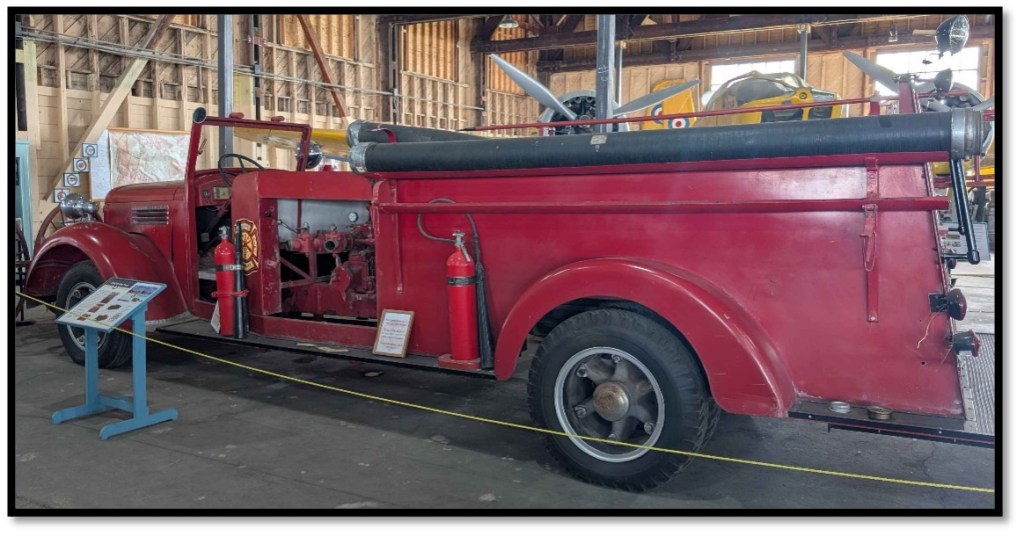
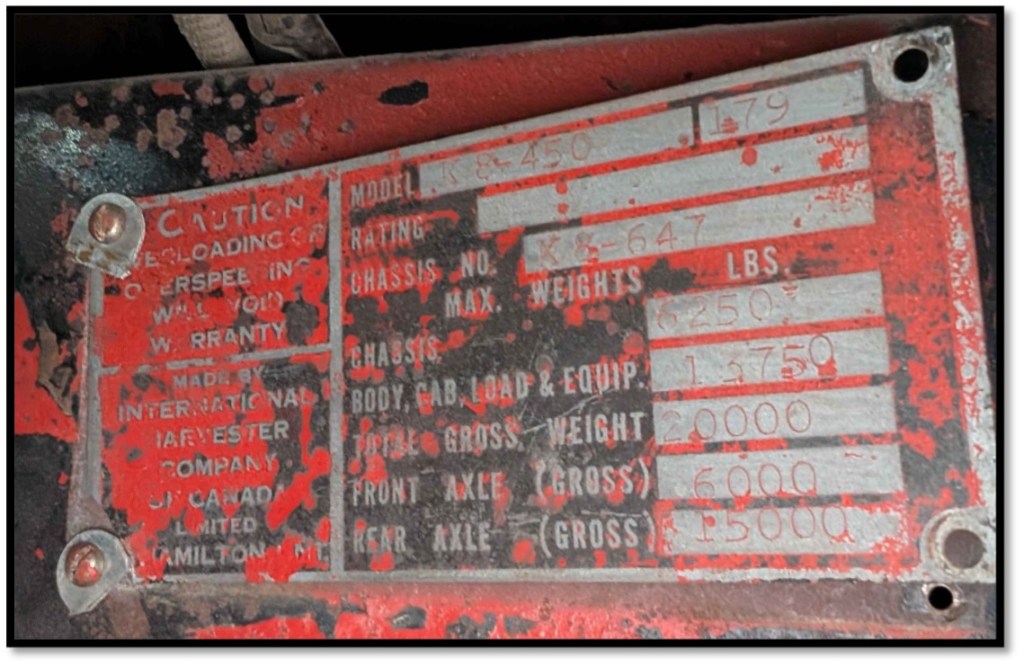
Sometimes this process is as simple as looking at the date on a letter, other times the process is much more complicated. It’s especially so when it comes to old machinery and power equipment. Doing the background research on some of the equipment is one of the ways I’ve helped out around the museum. Originally, during my first summer here, I was tasked with doing some research on our ground vehicles in order to make sure that our signage was up to date. This project not only piqued my interest, but it sparked my love of historical research. While doing this work, I started to become very familiar with not only Vehicle Identification Numbers (VINs), but with various forms of serial number/identification plates and how to research them. It was a great introductory project, though I would love to go back and have the chance to re-do it with all the new information that I’ve learned since.
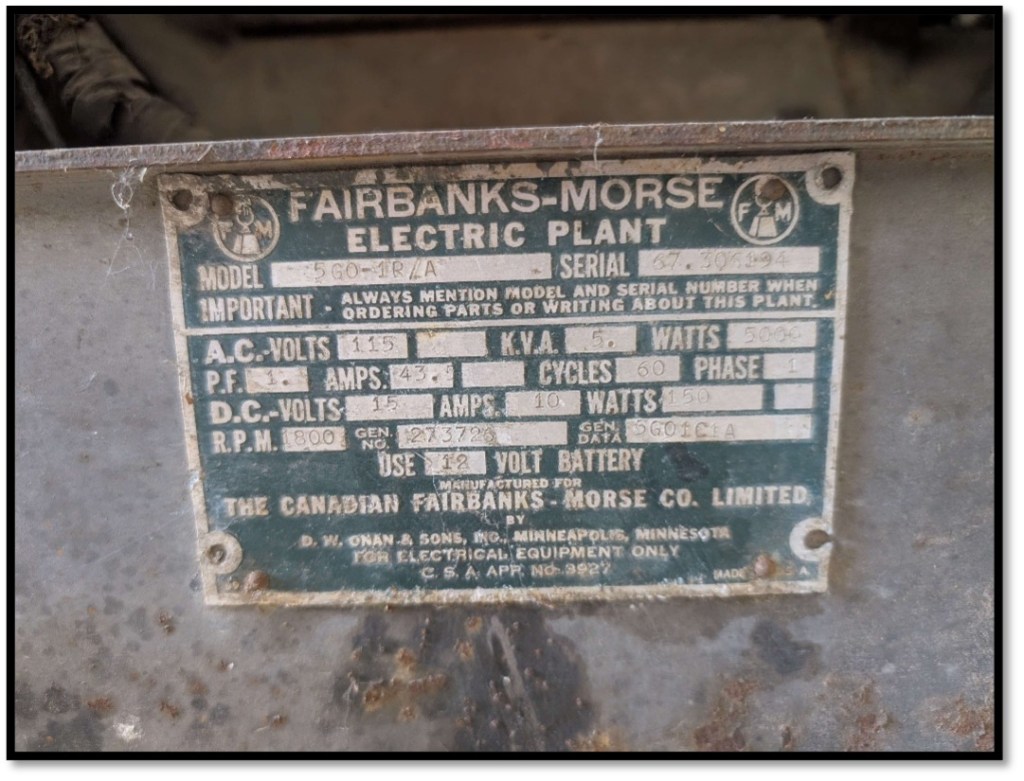
It was during my second summer at the museum that I was first tasked with researching one of our mysterious machines — an antique portable generator. Nobody knew anything about the machine, except what it was, and they wanted me to determine if it was related to the BCATP or for that matter, even war era. What’s tricky about researching these old machines, is that there aren’t any manuals or online databases you can use to look up serial numbers like with modern equipment. Another difficult part is that the companies that manufactured these objects often don’t exist anymore, or they’ve been renamed. This makes it so that you have to determine the year of the object, not from the object itself but from the context clues hidden around it. For this portable generator, it was the history of the manufacturer that provided me with the information I needed.
I initially started with the primary identification plate, and while I went down many other unnecessary rabbit holes (it was my first time after all), this plate provided me with all that I needed in the end. For some strange reason, my first instinct was to look into the battery system described on the plate. While I couldn’t find much concrete evidence, I was roughly able to determine that 12 volt battery systems didn’t become commonplace in machines like this until after the war. Though it wasn’t enough information to completely write off the machine as post-war, it did start to raise some flags. After that, the next place I looked was much more logical — the manufacturing information on the bottom of the plate. This generator was manufactured by the Fairbanks-Morse company so that it could be sold by D.W. Onan & Sons, so I began looking for the connection between these two companies. I was able to find a short book on the history of D.W. Onan & Sons and in there it stated that these two companies did not begin collaborating until just after the war. This means it was not possible for the generator to be war-era or related to the BCATP.
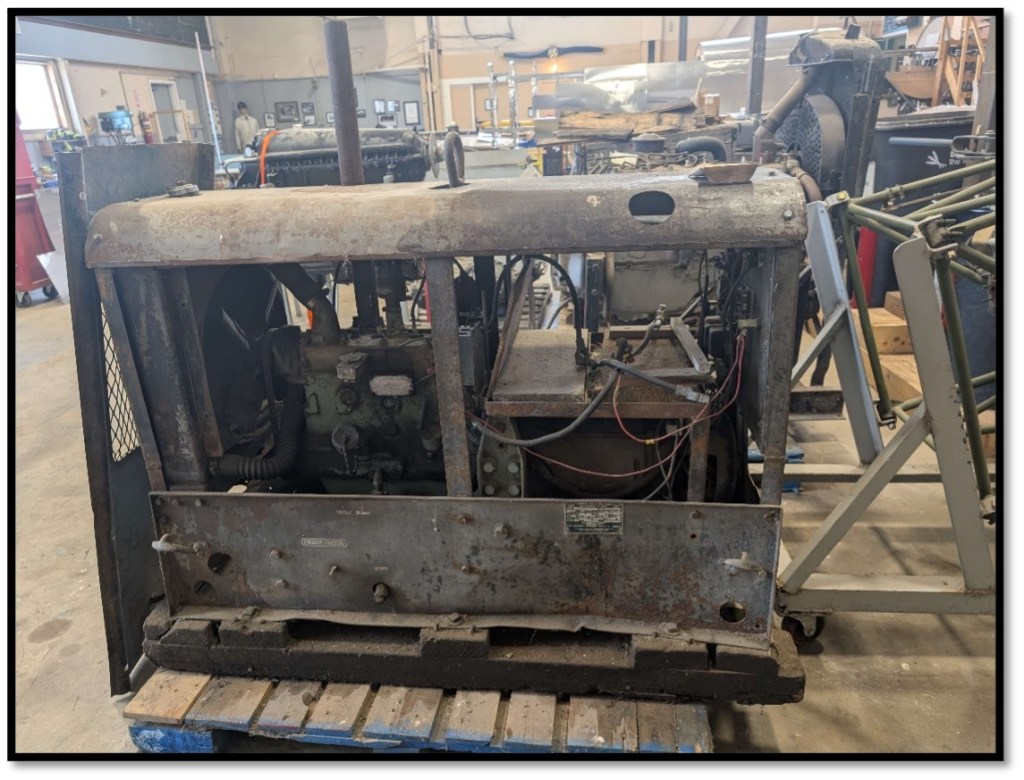
From here, it was time to think about the next steps. This generator did not fit our museum, so we couldn’t keep it. It wasn’t functional and it was very unlikely that another museum would be willing to take it. So, I had to make the unfortunate, but surprisingly common suggestion that the generator be scrapped for parts. This side of museums and archives is often very rarely discussed, but sometimes not everything is worth keeping. A large part of archivists’ jobs is to destroy objects that do not have a proper home and no longer provide value. Sometimes the best way to make sure things are properly preserved is to get rid of other objects taking up space. Of course, the destruction of objects is used as a last resort, but that does not change the fact that sometimes it is a necessity; such as with this generator. While it is important to preserve our past, we cannot hoard memories. When it comes to museums, the artifacts and objects they collect are one of the main driving forces. Plenty of work and research goes into the exhibits that our guests see, but almost just as much invisible work happens behind the scenes. This is true for us here at the Commonwealth Air Training Plan Museum and it’s true for every other museum around the world. These kinds of tasks take both people and time, so if you’re ever interested in volunteering to help with this side of our museum, we would be more than happy to welcome you to our team.

