This is the second post written by one of our summer student workers, Seraphina G., Seraphina is a music student at Brandon University.
Andy Sparling (son of Streamliner saxophonist Phil) is the source for much of the information, the photos and the recording in this article. His book “Dance Through the Darkness: The Untold Story of the RCAF Streamliners” is available by contacting him at andy.sparling89@gmail.com
“We were asked if we carried weapons. I said that I had my clarinet. But you can’t kill a guy with a clarinet.”
— Pat Riccio
When thinking about the 1940s, the first thing that may come to your mind would be the Second World War, but unbeknownst to many, this era had a rich music history with much emphasis placed on the jazz genre. The events of WWII overlapped with the height of the swing era, the period of jazz that highlighted big bands and upbeat, swung rhythms. The big bands were enjoyed at the time by civilians and soldiers alike, as music increased morale during desperately dark times. Many of the popular swing bands at the time originated from the US, such as Major Glenn Miller’s Orchestra which was greatly enjoyed by soldiers. Despite the focus on American talent, many loved bands were coming from Canada; one of these bands was the RCAF Streamliners from St. Thomas, Ontario. During the devastation of war, the RCAF Streamliners used music to comfort the suffering people and transformed jazz into a bridge between the home front and battlefront.

The RCAF Streamliners (though it wouldn’t receive its name until later on) was started in the spring of 1941 by Bill Carter, an airman at the RCAF Technical Training School in St. Thomas. Carter played trumpet professionally before joining the RCAF and after enlistment, he wanted to form a dance band with some of his fellow airmen. He recruited two other musicians who enlisted in the Air Force, Jack Perdue and Phil Sparling. The three were reassigned to bandsmen and worked together to enlist other airmen into the band, and by July 25th, 1941, they had enough players for their first performance. The band would continue to perform and grow in popularity among the Air Force and were eventually reassigned to Gander, Newfoundland, where they arrived in early 1943. The Streamliners were wildly loved in Gander and played for many events and dances. The band had a unique sound that was enjoyed by many; this was because their saxophonist, Pat Riccio, being a talented arranger.

During their time in Gander, the RCAF Streamliners received their name and spent the majority of their free time either practicing or rehearsing. On top of their performances in both civilian and military settings, the band also recorded a weekly radio broadcast which could be heard as far as Ontario. As their popularity increased, the Streamliners eventually received orders to report overseas for duty and to function as morale for troops and civilians overseas. They left Gander on the Empress of Scotland and arrived in London within a month of getting their orders. Many concerts were scheduled for the Streamliners once they were in London, and they performed in a many different venues. One of the venues was the Lincoln Inn Fields Park, where they held daylight concerts that were often under the threat of being bombed by Axis forces. Despite the risk, thousands of people would still turn out for these performances.
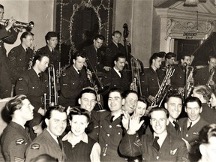
The RCAF Streamliners were loved in both Canada and Europe, and they received high praise from another military swing band at the time – Glenn Miller’s Orchestra. Glenn Miller and his group were in Europe for the same reason, to bring comfort to the people during trying times. After witnessing one of the Streamliners’ concerts, Glenn Miller told an interviewer “The RCAF Streamliners are the best band in Europe – Next to mine!”. His compliment helped the growth of the Streamliners popularity. On top of this praise, the band also performed with many popular acts overseas, such as Stephane Grappelli and Vera Lynn. This whirlwind of performances and popularity lasted only 4 months and by the end of 1944, the RCAF Streamliners were given a new assignment – to bring a taste of home to the Allied troops on the front lines.
The RCAF Streamliners were shipped out of southern Belgium and in late December 1944, they found themselves weaponless on the frontlines of the Battle of the Bulge. Although they were absolutely convinced that they were going to die, the band carried their instruments amid gunfire and arrived at a small church in the Dutch countryside. Here, with the chaos of battle all around them, the band played to tired and anxious troops. The soldiers were on such high alert that whenever the church door opened, everyone would stop swaying to the music and point their rifles at the door… just in case it was the enemy. This was one of many concerts given by the Streamliners on the frontlines and each one brought great comfort to the struggling soldiers. The band travelled all around Europe and performed in the most devasting of circumstances, including a performance in the rubble of Hamberg where it was estimated that 40,000 civilians died.
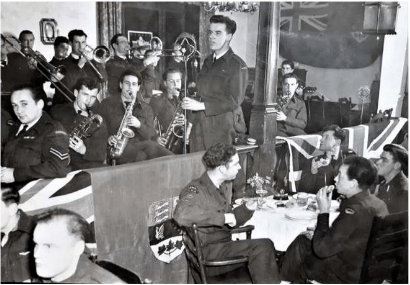
The RCAF Streamliners continued to spread hope and joy until 1946, delivering over 400 concerts in under 2 years. The group disbanded after the war ended and they were discharged from the military, though most members continued to make music. Some of them even ended up playing with legendary musicians such as Duke Ellington and the Beatles. The story of the RCAF Streamliners is a powerful reminder of music’s ability to uplift, even in the darkest of times. From their humble start at the RCAF training schools in Canada to their performances on the war-torn front lines of Europe, the Streamliners carried hope to those impacted by the devastation. Their music bridged the gap between home and war, offering soldiers and civilians alike a short escape from the difficulties of battle. The praise they received from Glenn Miller and their collaborations with renowned artists showcase their incredible talent and influence. The band had an amazing ability to unite those facing the harsh realities of the Second World War. The RCAF Streamliners were more than a band, they were a symbol of hope in some of humanity’s darkest moments. They knew that despite the dangers, as long as there was music to be played, the show must go on.
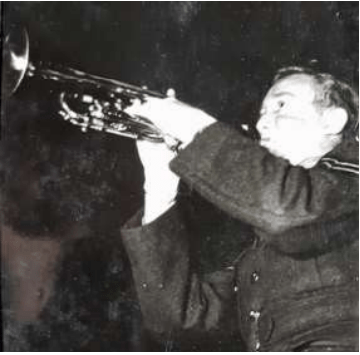
Left: Billy Carter, who started it all.
If you would like to hear a recording of the Streamliners, click here!


 Commonwealth Air Training Plan Museum & RCAF WWII Memorial