Press Release: CATPM Welcomes New Director General

Brandon, MB — The Commonwealth Air Training Plan Museum (CATPM), Canada’s only museum solely dedicated to the British Commonwealth Air Training Plan and a designated National Historic Site, is proud to announce the appointment of Zoe McQuinn as its new Director General.

Zoe brings over two decades of experience in museum leadership, education, and international cultural work. Most recently the Director of Development at the Manitoba Museum, she led major accessibility initiatives, secured funding for transformative capital projects, and championed community-rooted storytelling. She now takes the helm at CATPM to guide the museum through an ambitious, multi-phase redevelopment that includes structural restoration, exhibit renewal, and national partnership-building.

photo of Zoe McQuinn

“Zoe brings an extraordinary blend of academic insight, international museum experience, and heartfelt community engagement. Her leadership marks an exciting new chapter for CATPM as we honour our past and build for the future.”
— John McNarry, President, Board of Directors, CATPM

Zoe also brings a global perspective to her new role. From 2019 to 2022, she worked in Egypt with colleagues at the Grand Egyptian Museum (GEM) to support its monumental opening. Her work focused on interpretive planning, exhibition development, and institutional capacity building. Prior to that, she held key roles in the Learning & Programs departments at the Royal Ontario Museum, where she developed innovative programming and exhibition strategies with a focus on accessiblity, sustainability, and community collaboration.

“We’re thrilled to welcome Zoe to the CATPM team. Her passion for inclusive storytelling and her vision for revitalizing this important National Historic Site are exactly what we need as we move into a bold and inspiring new era for the museum.”
— Stephen Hayer, Executive Director, CATPM

In addition to her museum leadership, Professor McQuinn served as a lecturer at the University of Toronto for over 20 years, teaching courses on the archaeology of Egypt and the ancient Near East, Egyptian art, architecture, and religion, as well as thematic and interdisciplinary courses. These included explorations of mummification, gender and sexuality in ancient Egypt, and the reevaluation of past archaeological narratives through scientific, racial, and decolonial theory lenses—courses that challenged assumptions and connected ancient stories to present-day perspectives.

“I’m honoured by the trust placed in me to help shape the next chapter of this extraordinary museum,” said Zoe. “The stories of service, innovation, and sacrifice embodied here are both humbling and inspiring.”

Her appointment comes at a pivotal moment for CATPM, as it revitalizes its historic site to enhance visitor experience, preserve its legacy, and ensure long-term sustainability.

For more information, visit www.airmuseum.ca.

Media Contact:
Commonwealth Air Training Plan Museum
204-727-2444

All the Small Things

This post was written by one of our summer student workers, Seraphina G., Seraphina wrote a few post for us last summer, and continues with this one, she is a music student at Brandon University.

It’s all the small things that keep this museum running. While a museum is a large project that requires extensive fundraising and public outreach to keep standing, at the heart there are little details that need to be attended to; little details that mustn’t be forgotten. All museums are the same in this way, and the Commonwealth Air Training Plan Museum is no different. Museums and those who work in them are starkly aware of this fact and continuously choose to aid each other rather than treat others as competitors. If we receive a donation that cannot be housed in our archives, we will find a better home for it as quickly as possible — we will find another museum to care for it. We are committed to preserving the past, even if it means we cannot provide that protection ourselves.

logo of the CATP Museum

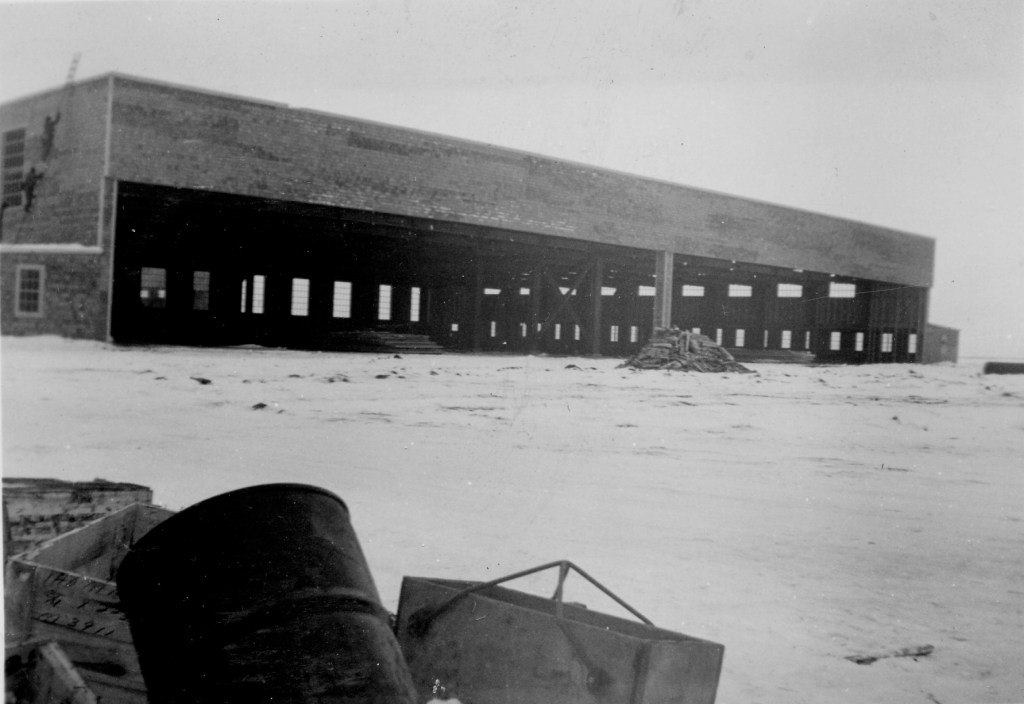
            That kind of commitment isn’t made; it’s born from both passion and choice. It’s museums and their volunteers who hold onto history and choose to passionately preserve our past for all future generations to come. There are so many ways in which this is done, and our museum is lucky to have such a wide assortment of focused and caring individuals. The CATP Museum is situated in a historic hangar that officially opened in 1941, making it 84 years old today. This building was constructed under severe time constraints and pressure from the war; it was never meant to last more that 5 years. The fact that our hangar is still standing today seems like a miraculous feat of magic, but truthfully, that’s not why it’s still here. Our hangar is here due to this aforementioned passion for preservation.

            A building like this takes an incredible amount of maintenance. From repainting and repairing, to checking the integrity of the old, creaking trusses, there is work that needs to be done consistently. The lawn needs to be mowed, concrete floors swept, and all the electrical wires need to be inspected. This is all done by our ardent volunteers, who are here daily, who take time out of their lives to be here. Work like this often goes unnoticed and underappreciated, yet it is still done because of how much our volunteers care for the museum. I recognize this kind of work may seem thankless, but it is so deeply valued — so this is my thank you, I write out of undying support to those who work hard to maintain this building. This museum would not be standing if it were not for their dedication.

            Our volunteers do more than just maintenance. Our archives are vast, and they contain over 40 years of remarkable donations. Every single donation, every object bequeathed to our possession has been carefully tended to with loving hands. Each item analyzed, labelled, catalogued and placed safely on a shelf. Not to collect dust, but rather to hold our history to light and keep it spectacularly preserved. What you see in our exhibits, is not all that we are. Maintaining archives takes countless hours of work, and again, this work often goes unnoticed and underappreciated. Every little thing is lovingly looked after by our dedicated archival team; every photograph that was once cherished has been acknowledged and sweetly cherished once again by our diligent volunteers. Our history would so quickly disappear if it were not for these volunteers who are so willing to preserve it.

            Our website and social media are other things that are carefully managed by our volunteers. The world is quickly advancing, and all museums alike are doing their best to adapt. The world is at our fingertips, and all knowledge is just a few clicks away — it’s amazing and it has done so much for our society. However, it has left its marks in many negative ways. Our history, and the fires that forged us are incredibly important, though culturally our focus tends to lie on the present. Our website and social media allow us to bridge that gap, creating a beautiful juxtaposition of the past and present. Without volunteers willing to take photos, write blogposts and take the time to form social media posts, there’s a level of public outreach that would be lost. When it’s right at our fingertips, it’s so easy to forget about the loyal volunteers who put it there in the first place. This is one of the many little things that keep us afloat here at the CATP Museum.

            I am writing this today, as a thank you to everyone who tirelessly volunteers their time to this museum. While everyone is focused on larger scale projects, you manage all the small things that keep us running, that keep history alive. Without you, this museum would have disappeared long ago, and it would have faded into a forgotten memory. This is also more than just a thank you. This is a love letter to all museums and all the people within them who are passionate enough to care. If you ever feel like your dedication to preservation is overlooked or underappreciated, please know that I see you, we at the Commonwealth Air Training Plan Museum see you. You are doing utterly important work. If we do not know our past, we are doomed to repeat it. All the small things have made it so that our history as a people will never fade and be forgotten.

A Tribute to Bob Mazer

The Commonwealth Air Training Plan Museum mourns the passing of Bob Mazer, a visionary builder, community leader, and unwavering champion of Brandon’s heritage. His legacy has left a profound mark not only on Manitoba’s agricultural and business landscape, but also within the historic walls and future vision of our museum.

logo of the CATP Museum

As Capital Campaign Chair, Bob brought the same steadfast commitment and big-picture thinking that made Mazergroup a cornerstone of industry. Under his leadership, the campaign began building the foundation for the museum’s long-term redevelopment—ensuring future generations can connect to the legacy of service, sacrifice, and innovation that defined the BCATP and Canada.

Bob’s commitment was deeply personal. His wife, Patti Mazer, whose father Ed McGill trained as part of the British Commonwealth Air Training Plan, inspired their shared dedication to preserving the stories of those who served. Together, they understood that supporting the museum wasn’t only about honouring the past—it was about investing in the future of community, education, and remembrance. 

Bob believed in the power of place. He understood the museum’s importance as a living site of memory and civic pride, and his advocacy helped spark vital momentum for critical projects. In every phase of planning, he pushed forward with courage, clarity, and heart.

We honour Bob not only for what he gave, but for what he believed: in people, in progress, and in preserving the values that make our region strong. The Commonwealth Air Training Plan Museum is proud to carry his legacy forward, with heartfelt gratitude to Patti and the entire Mazer family for their enduring support. His story is now part of our story—and it will always be shared.

Bob didn’t just support the Museum—he helped build its future. His belief in honouring service and investing in community will guide us every step of the way.” Zoe McQuinn, Director General, & Staff of CATPM

Ron Mallet & His Accordion

This post, his second for us, was written by Rory M., one of our summer students. Rory is a Music major at Brandon University.

Musical instruments across the world carry memories of their players, and the history that they have endured. As a musician myself for most of my life I have always been amazed especially by the story of the instruments in my family; including my 1926 Markneukirchen church violin that was used through the war in a German church near the Czechia border, the 1955 King 3B trombone that was produced and later refurbished by the H.N. White Company in Cleveland Ohio, 1964 Fiddle that belonged to my great-grandfather who played in dance bands across Manitoba, and my great-uncle Malcolm’s Manhattan trumpet, that was transported back to my family following his death in the RCAF as a navigator in 1943. 

Another instrument that always caught my eye during my time thus far as a summer student was the accordion in the personal item section of the main gallery. The accordion is a beautiful work of art and identifiable of Italian origin, and the only identifying information surrounding the accordion is “Soprani”, and an archival tag for our museum. While some staff had an idea of the origin of the instrument and the story of the gentleman who owned it during the war, there was no clear consensus on the exact owner. Following a search in the archives we were able to obtain a series of letters sent in the span of 1941-1942, by RCAF Pilot Officer Ronald Mallett.

His instrument, an E Soprani Accordion is a brand of accordion founded in 1910 in the central Italian town of Castelfidardo. These instruments quickly gained an excellent reputation before the war for their quality of tone and high standard of workmanship. The same traditional production techniques of these instruments have been handed down through the generations of master instrument makers, and are made largely the same in 2025 as they were in the 30s when Ronald would have purchased his instrument. Today, these instruments are still produced in Castelfidardo.

Ronald Mallett was born on October 8th, 1919 in Elkhorn, Manitoba to parents George and Agnes, and had three siblings, Amy, Albert, and Clifford. Following his secondary education at Elkhorn Collegiate, he attended the Chicago School of Air Conditioning and Refrigeration, where he later found employment at the Canada Car and Foundry in Fort William, ON. Ron was working in Fort William until joining the Canadian Army, where he served and trained in Shilo from March to June of 1941. His service in the army then ended when he transferred to the RCAF and began right here in Brandon; attending #2 Manning Depot in Brandon beginning on June 27th, 1941. He is in fact in Jack Taylor’s Barbers Book in the CATPM’s main gallery (see previous blog post on August 30th, 2024), in which he is on page 59 of book 1. Another connection that Ronald has to our museum is that he flew in both the Fairey Battle and Avro Anson, two aircraft that are either in progress or on static display in the CATPM. Following his time in Brandon, Mallett then attended Initial Training School (ITS) in Edmonton where I found a first confirmation of his playing of his accordion, in a letter to his sister Amy.

Thanks for the sheet of music, It arrived today and I’ll practice it tonight. I have been playing it by ear, but this will help me correct my mistakes. If I continue to get chances to practice at the next station I am going to have a lot of nice pieces to play for you and Joyce to dance to. I bought a book of swell tunes at Saskatoon and have spent quite a little time on them. Yes, I play from taps, also the Boys Good-bye, Apple Blossom Time, Good-bye Dear, I’ll Be Back in a Year, and a few more of the popular ones.

(Ron Mallet, November 4th, 1941, to sister Amy Forsyth, ITS in Edmonton, AB)

The sheet music for “Apple Blossom Time” by the Andrews Sisters; a popular singing group of the swing era, can be found in the personal items case along with the accordion, and prior to the letters we found, we were not aware that the two items were related to the same man! Following ITS in Edmonton, Mallett attended training in Saskatoon (Secondary Flying Training School), Portage (Air Observer School), and made his final stop in Canadian air training in Canada, at Paulson MB’s Bombing and Gunnery School.

On the Wed. night of the final week at Portage, we had our Flight Party and it was a huge success. I chorded and led the tunes for the sing-songs and certainly enjoyed myself. The C.O. cracked down and gave us all a surprise by leading much of the singing as well as giving us a few choice English solos.

(Ron Mallett, February 23rd, 1942, to Family, B&G School in Paulson, MB)

While the extent of Ron’s accordion performance in the RCAF was not formally sponsored, I was able to observe from his letters that his accordion was an avenue for recreation, relaxation, and collective enjoyment among other service members. Ron also had other expertise on other instruments and played both harmonica as well as piano on some of the bases in which he trained. Following the completion of his training, Ron headed overseas to England, where he finished his training in various English sites, including a Personnel Reception Center in Bournemouth, and an Operational Training Unit in Wellesbourne. 

In his letters during this period, Mallett speaks of greater free time after his training for recreation and enjoyment. Throughout this time in England, he spent his day meeting new people through various dances (including mentions of meeting a 22-year-old nurse with whom he attended many) as well as watching films in theatres throughout his time in England. One question, however, remained as months in England passed; how come there is no reference to him playing any accordion in dances or his free time on base? Following further reading of letters home for many months, clarification was provided in a letter dated August 7th, 1942, about three months before his passing. 

Sadly I’d like to be home this weekend to spend the day and morrow with you folk, and the night. Just to get my hands on that accordion again, would be quite a thrill in itself especially at this station where we quite have a couple of hours in the evening.

This provided the way that Ron Mallett’s accordion ended up in the hands of the CATPM; it was sent back to Elkhorn to his family following his training in Canada. While we assumed that similarly to my great-uncle’s trumpet it was shipped home following his passing, it never left Canada. Following this letter, Ron spent the remainder of his time preparing for action in various training units, and passed away in a mission over Wellesbourne along with two other Canadians in a Wellington Mark III, on November 30th, 1942. Mallet was posthumously promoted to Flying Officer and was honoured by his Group Captain Commanding as the “very finest type of young man upon whom we are relying to win the war, and I need hardly tell you that he was extremely popular with everyone here. His keenness on his job and his enthusiasm for everything he took in hand were most marked.

The most important lesson that I draw from the observation of artifacts in the museum is to remember that while every artifact portrays a part of the larger whole of war, they are additionally remnants of young people who grew up in our communities. As we remember the stories of artifacts like the accordion and young men like Ronald Mallett, it is important to remember just as Romanian-American holocaust survivor Elie Wiesel offered, “When you listen to a witness, you become a witness.” The further that we are removed in time from conflicts that affected our history and the freedoms that we observe today, we must not grow desensitized from the tragedy of war; especially as we see hatred and disregard for human life in many ways across the globe. I am grateful for the opportunity to observe history under the access of the CATPM, additional thanks to mallettfamilyhistory.org, for clarifying certain details of his life.  

Notice: Museum Closed July 8-9

Unexpected Closure: July 8–9, 2025

Please note that the CATPM will be closed on July 8 and 9, 2025, due to an unexpected infrastructure upgrade by Manitoba Hydro that affects our power systems.

We apologize for the inconvenience and thank you kindly for your interest and understanding. The Museum will reopen as usual on Thursday, July 10 at 10:00 AM.

If you’ve planned a visit or would like to reschedule a group booking, please contact us at airmuseum@inetlink.ca or call 204-727-2444.

Thank you for your continued support!